
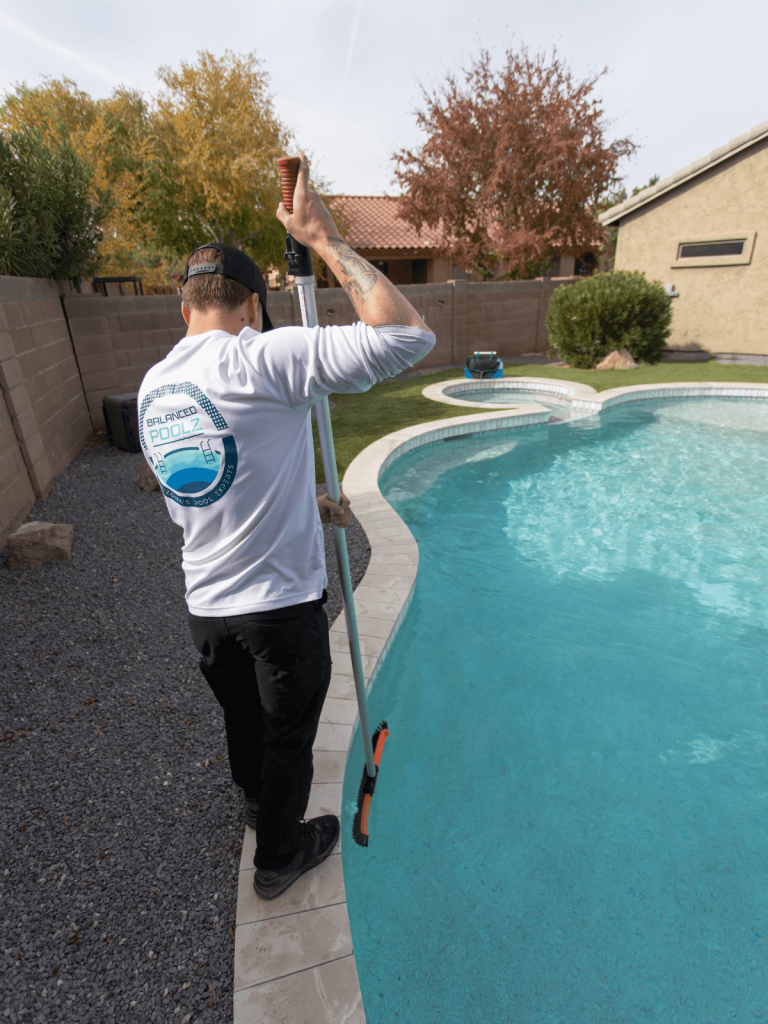
Does your pool surface look chalky, white, or rough to the touch? If so, you may be dealing with calcium buildup. This common problem affects many pools across the East Valley, and proper calcium removal pool care can restore that smooth, clean finish.
Here in Chandler and nearby cities, our hard water makes calcium deposits a frequent headache. Therefore, understanding how acid washing works can help you protect your investment.
In this guide, we explain what causes calcium buildup. We also cover how acid washing removes it and when to call a professional.
What Causes Calcium Buildup in Arizona Pools?
Arizona is famous for hard water. Because of this, our local pools collect minerals faster than pools in many other regions.
Calcium scale forms when dissolved minerals leave the water and stick to surfaces. As a result, you see white or gray crust along tile lines, steps, and walls.
Hot, dry weather speeds up this process. Meanwhile, high evaporation rates leave minerals behind in your pool water.
Two Common Types of Calcium Scale
Pool owners usually face two main types. First, calcium carbonate appears as white, flaky deposits. You can often scrape it lightly with a tool.
Next, calcium silicate shows up as gray-white, hard scale. This type is tougher and usually needs professional treatment.
Knowing the type helps determine the right fix. However, identifying it correctly can be tricky for a homeowner. Therefore, a trained technician can save you time and guesswork.
What Is Acid Washing and How Does It Work?
Acid washing is a deep-cleaning process for the pool surface. First, we drain the pool completely. Then we apply a diluted acid solution to the walls and floor.
The acid removes a thin layer of plaster. As a result, it strips away stubborn calcium, stains, and discoloration. Finally, the surface looks fresh and bright again.
This method works well for plaster and pebble finishes. However, it is a strong process, so it should not be done too often.
Why Acid Washing Is Best Left to Professionals
Acid is dangerous when handled incorrectly. Because of this, safety gear and proper technique are essential. The U.S. Environmental Protection Agency also highlights the importance of safe chemical handling and proper water disposal.
Additionally, too much acid can damage your pool surface. Over-etching shortens the life of plaster. Therefore, an experienced technician knows exactly how much to apply.
Our team serves homeowners across Chandler, Gilbert, Mesa, and Tempe. As a result, we understand local water conditions and how they affect your pool.
Signs Your Pool May Need Acid Washing
Not every pool needs an acid wash. However, certain signs point to a deeper problem. Watch for these clues:
- Rough, sandpaper-like walls that feel gritty to the touch
- White crust along the tile line that brushing cannot remove
- Stubborn stains that normal cleaning ignores
- Dull, dingy plaster that no longer looks bright
- Heavy buildup after draining a green or neglected pool
If you notice these issues, acid washing may help. On the other hand, mild scale can sometimes be managed with brushing and balanced chemistry.
When Brushing Is Enough
Light calcium often responds to regular brushing. Therefore, weekly maintenance can prevent buildup before it hardens.
For example, our weekly service includes brushing, skimming, and chemical testing. As a result, many Gilbert and Mesa pools never reach the acid-washing stage.
The Acid Washing Process Step by Step
Many homeowners want to know what to expect. So here is a simple breakdown of the process.
Step 1: Draining the Pool
First, we drain all the water. This must follow local guidelines for safe disposal. Therefore, we plan the drain carefully to avoid problems.
Step 2: Pre-Cleaning the Surface
Next, we rinse and inspect the empty pool. We also note any cracks or weak spots. Because of this, we can flag repairs before applying acid.
Step 3: Applying the Acid Solution
Then we apply a carefully diluted acid mix. We work in sections to keep the process even. Meanwhile, we scrub the surface to lift the calcium.
Step 4: Neutralizing and Rinsing
After the acid does its job, we neutralize it. This protects the surface and the surrounding area. Finally, we rinse everything thoroughly.
Step 5: Refilling and Balancing
Last, we refill the pool with fresh water. Then we balance the chemistry. As a result, your pool is ready to enjoy again.
Want a professional to handle this for you? Contact the Balanced Poolz team to discuss your pool and your options.
How to Prevent Calcium Buildup in the First Place
Prevention is always easier than removal. Therefore, smart habits can reduce future scale problems.
First, keep your water chemistry balanced. High calcium hardness and high pH speed up scaling. As a result, regular testing makes a big difference.
Simple Prevention Tips
- Test your water weekly for pH, alkalinity, and calcium hardness
- Brush tile lines often to stop deposits from hardening
- Keep evaporation in check with a cover when possible
- Watch your fill water since Arizona tap water is mineral-heavy
- Schedule regular service to catch problems early
Additionally, consistent care protects your equipment. Calcium can clog filters and pumps too. Therefore, prevention saves money over time.
Why Local Knowledge Matters
Pools in Chandler face different conditions than pools elsewhere. Our hot summers and hard water create unique challenges. Because of this, local experience really helps.
We serve communities across the East Valley, including Tempe and Scottsdale. As a result, we know how to keep your pool clear year-round.
Frequently Asked Questions About Calcium Removal
How often should a pool be acid washed?
Most pools only need it every few years. However, this depends on water conditions and buildup. Therefore, a technician should assess your pool first.
Can acid washing damage my pool?
Yes, if done incorrectly. Acid removes a thin plaster layer each time. As a result, frequent washing shortens surface life. So professional care is important.
Can I acid wash my pool myself?
We do not recommend it. Acid is hazardous and requires proper handling. Additionally, mistakes can ruin your finish. Therefore, hire a trained pro.
Will acid washing fix all stains?
Not always. Acid washing handles calcium and many stains well. However, some metal stains need different treatments. So a proper diagnosis matters.
Is acid washing the same as a green-to-clean cleanup?
No, but they often go together. A neglected pool may need algae recovery and acid washing. As a result, we sometimes combine both services.
Keep Your Pool Clear and Healthy
Calcium buildup is a common but manageable problem. With the right care, your pool can look smooth and bright again. Therefore, do not let scale take over your surface.
Our team delivers affordable, reliable, and knowledgeable pool care. We back our work with a 30-day money-back guarantee and no long-term contract. As a result, you get trustworthy service every time.
Ready to restore your pool? Request a free quote today. We proudly serve Chandler, Gilbert, Mesa, Tempe, and the greater East Valley. So reach out and let us help your pool shine again.