
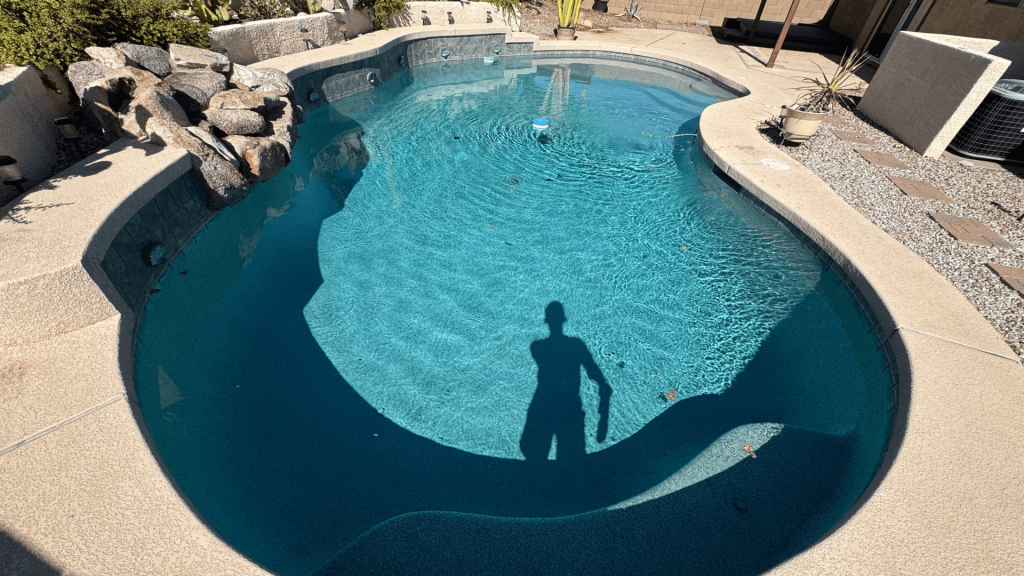
Arizona pool water balance can shift in just a few days. One day your water looks crystal clear. The next day it turns cloudy or starts to itch your skin.
If you own a pool in Chandler, you have likely seen this happen. The desert climate works against your water chemistry every single day. Because of this, many homeowners feel like they are always chasing the right numbers.
However, you are not doing anything wrong. The reasons are tied directly to our extreme Arizona environment. Below, we explain why this happens and how to stay ahead of it.
What Pool Water Balance Actually Means
Pool water balance is the harmony between several key chemical levels. These levels work together to keep your water safe and clear.
When they fall out of range, problems appear fast. For example, you may notice algae, scale, or burning eyes.
The Main Numbers to Watch
- pH: Measures how acidic or basic your water is.
- Chlorine: The sanitizer that kills bacteria and germs.
- Total alkalinity: A buffer that keeps pH stable.
- Calcium hardness: The amount of dissolved calcium in your water.
- Cyanuric acid: A stabilizer that protects chlorine from sunlight.
Each of these affects the others. Therefore, one change can throw everything off balance. In Arizona, that change often comes quickly.
Why Arizona Pools Are So Hard to Keep Balanced
Our desert climate creates a perfect storm for water chemistry problems. Heat, sun, dust, and dry air all play a role. As a result, your pool needs more attention here than in milder climates.
1. Intense Sunlight Destroys Chlorine
The Arizona sun is relentless for most of the year. Ultraviolet rays break down chlorine very fast.
Because of this, your sanitizer can vanish within hours on a hot day. Without enough chlorine, algae and bacteria grow quickly. This is why pools in Gilbert and Mesa often turn green after a busy weekend.
2. Extreme Heat Speeds Up Evaporation
When water evaporates, the water leaves but the chemicals stay behind. As a result, your levels become concentrated and unbalanced.
Then you add fresh water to refill the pool. However, that fresh water dilutes everything again. This constant cycle keeps your numbers moving.
3. Hard Water From the Tap
The East Valley is known for very hard water. Our tap water carries high mineral content, especially calcium.
Over time, this raises your calcium hardness levels. As a result, scale can form on tile, equipment, and surfaces. The U.S. Geological Survey explains how water hardness develops from dissolved minerals, which helps you understand our local conditions.
Seasonal Swings Make It Even Harder
Arizona does not have one steady climate all year. Instead, we move through dramatic seasonal changes. Each season brings its own chemistry challenges.
Summer Heat and Heavy Use
Summer is the hardest season for pool owners. Triple-digit temperatures push evaporation to the limit.
Meanwhile, more swimmers add sunscreen, oils, and sweat to the water. Therefore, your chlorine demand rises sharply. You may need to test and adjust more often during these months.
Monsoon Season Brings Storms
Monsoon season hits the Valley hard each summer. Strong winds blow dust, debris, and pollen into your pool.
Heavy rain also dilutes your chemistry quickly. As a result, your pH and chlorine can crash overnight. After a storm, your pool often needs immediate attention.
Winter Still Needs Care
Many owners assume winter pools take care of themselves. However, that is a common mistake.
Cooler water still allows algae to grow slowly. Additionally, dust and leaves keep falling in Tempe and Scottsdale yards. Therefore, year-round care remains important even when nobody swims.
How Imbalanced Water Affects Your Pool
Ignoring your chemistry leads to real problems. Some are simply annoying, while others get expensive.
Common Signs of Trouble
- Cloudy water: Often caused by high pH or poor filtration.
- Green water: A clear sign of algae and low chlorine.
- Scaling: White, crusty buildup from high calcium.
- Corrosion: Damage to equipment from low pH water.
- Skin and eye irritation: A result of unbalanced sanitizer levels.
Each problem affects your comfort and your wallet. For example, scale can clog filters and harm your heater. Therefore, balance protects both your water and your equipment.
How to Stay Ahead of Arizona Water Changes
You cannot stop the desert climate. However, you can manage your pool with a smart routine. Consistency is the real secret to clear water.
Test Your Water Often
Testing once a week is the bare minimum here. During summer, test even more often.
Because levels shift fast, frequent testing helps you react early. As a result, you avoid major problems before they start.
Keep Your Stabilizer in Range
Cyanuric acid protects chlorine from the sun. Therefore, the right level is essential in Arizona.
Too little, and your chlorine burns off fast. Too much, and your chlorine becomes weak. A balanced stabilizer keeps your sanitizer working longer.
Manage Calcium and Scale
Our hard water raises calcium over time. To fight this, watch your calcium hardness closely.
Sometimes, partially draining and refilling helps reset the levels. Additionally, regular brushing prevents scale from settling on surfaces.
Brush, Skim, and Clean Weekly
Good chemistry starts with a clean pool. Debris uses up chlorine and feeds algae.
Therefore, weekly brushing and skimming matter a great deal. A clean surface also helps your chemicals work more efficiently.
When to Call a Professional
Some pool problems are tough to fix alone. Green-to-clean recovery is a good example.
Severe algae blooms need the right products and order of steps. Furthermore, equipment issues often hide behind water problems. A weak pump or dirty filter can ruin even perfect chemistry.
At Balanced Poolz, we handle the full picture for East Valley homeowners. Our team provides weekly cleaning, chemical testing, and expert repairs. We also send detailed service reports with photos every week.
If your pool keeps slipping out of balance, let us help. You can explore our pool cleaning and maintenance services and find the right fit. Contact the Balanced Poolz team to discuss your pool today.
Frequently Asked Questions
How often should I test my Arizona pool water?
Test at least once a week during cooler months. However, summer often requires testing two or three times weekly. Frequent testing helps you catch fast changes early.
Why does my chlorine disappear so fast?
Arizona sunlight breaks down chlorine very quickly. Additionally, heavy swimmer use raises chlorine demand. The right stabilizer level helps your chlorine last longer.
Is hard water really a problem for my pool?
Yes, our East Valley tap water is very mineral-rich. Over time, high calcium causes scale on tile and equipment. Therefore, monitoring calcium hardness is important here.
Do I still need pool service in the winter?
Absolutely, winter pools still need regular care. Dust, debris, and slow algae growth continue year-round. As a result, consistent maintenance protects your investment.
What should I do after a monsoon storm?
First, remove debris from the water and skimmer. Next, test your chemistry, since rain dilutes your levels. Then balance your chemicals or call a professional for help.
Keep Your Pool Balanced Year-Round
Arizona pool water balance will always shift quickly here. The sun, heat, and hard water never take a day off. However, the right routine keeps your water clear and healthy.
You do not have to handle it all alone. Balanced Poolz proudly serves Chandler, Gilbert, Mesa, Tempe, and beyond. We offer fair pricing, no long-term contracts, and a 30-day money-back guarantee.
Are you tired of chasing your chemistry every week? Request a free quote and let our experienced team take over. Together, we will keep your pool crystal clear all year long.