
Arizona summers bring beautiful sunsets and sudden storms. These monsoon season pool tips will help you protect your pool when the skies open up. Storms arrive fast across Chandler and the East Valley.
Heavy winds, dust, and rain can turn clear water cloudy overnight. As a result, your pool may need extra care during these months. However, a few simple habits keep your water healthy.
In this guide, we share practical advice from experienced pool technicians. Therefore, you can stay ahead of the next storm and avoid costly problems.
Why Monsoon Season Affects East Valley Pools
Monsoon season usually runs from June through September. During this time, Chandler, Gilbert, and Mesa see powerful dust storms and downpours. Because of this, pools take a beating.
Strong winds blow dirt and debris straight into your water. Meanwhile, rain dilutes your chemicals and changes your water balance. As a result, algae can grow quickly.
Common Monsoon Pool Problems
Storms create several issues for pool owners across the East Valley. First, dust storms leave a layer of grime on the surface. Next, rain throws off your pH and chlorine levels.
- Cloudy water from dust and debris
- Low chlorine after heavy rain dilutes your pool
- Algae blooms caused by unbalanced water
- Clogged filters and skimmers full of leaves and dirt
- Storm damage to equipment and pool surfaces
However, you can prevent most of these problems. Therefore, preparation matters more than reaction.
Prepare Your Pool Before a Storm
Smart prep saves you time and money. Additionally, it keeps your pool safe during high winds. Watch your weather alerts closely during the season.
Secure Loose Items Around the Pool
Strong gusts turn patio furniture into hazards. Therefore, move chairs, toys, and umbrellas indoors before a storm. Also, store cleaning tools in a safe spot.
Falling items can crack tile or damage your pool surface. As a result, a few minutes of prep prevents bigger repairs later.
Balance Your Water in Advance
Test your water before the storm hits. Next, adjust your chlorine and pH to healthy levels. Because of this, your pool resists algae after the rain.
You can learn more about safe chemical ranges from the CDC guidance on residential pool water testing. Furthermore, balanced water protects swimmers and equipment alike.
Do Not Drain Your Pool
Many owners want to lower the water level before rain. However, this is usually a mistake in monsoon season. Empty pools can lift or shift in saturated ground.
Instead, leave the water in place. Then handle any overflow after the storm passes.
What to Do After a Monsoon Storm
Once the skies clear, act quickly. Fast cleanup stops small problems from growing. Moreover, it gets your pool swim-ready again sooner.
Skim and Remove Debris First
Start by removing leaves, branches, and dust. First, skim the surface thoroughly. Then empty your skimmer baskets and pump basket.
Heavy debris strains your equipment. Therefore, clearing it early protects your pump and filter.
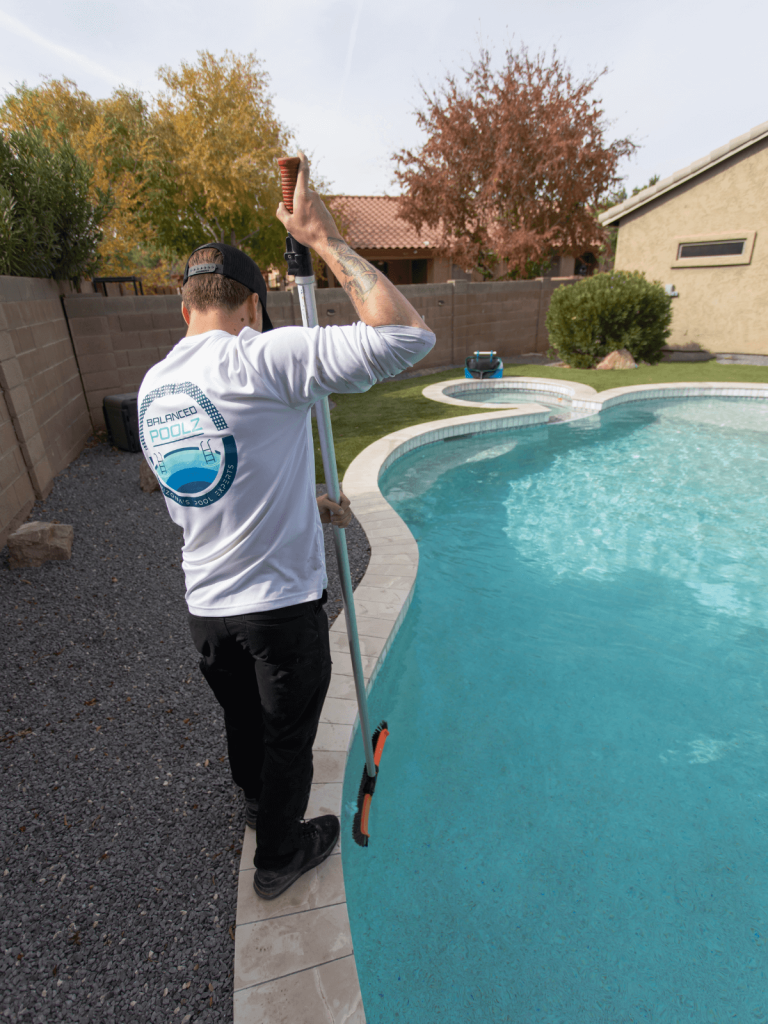
Brush and Vacuum the Pool
Dust settles on the floor and walls after storms. Next, brush every surface to loosen the grime. After that, vacuum the pool to remove the dirt.
Pay close attention to corners and steps. Also, brush behind ladders where debris collects.
Test and Rebalance the Water
Rain changes your chemistry fast. Therefore, test your water as soon as it is safe. Then adjust chlorine, pH, and alkalinity.
Shock the pool if the water looks cloudy or green. As a result, you stop algae before it spreads. Run your pump longer to circulate the chemicals.
Protecting Your Pool Equipment
Storms can stress pumps, filters, and automation systems. Because of this, equipment care matters during monsoon season. A little attention prevents expensive failures.
Clean and Check Your Filter
Storms send extra debris through your system. Therefore, clean or backwash your filter after big storms. A clogged filter cannot keep water clear.
Inspect filter cartridges for tears or wear. Then replace them if they look damaged.
Inspect After Power Outages
Monsoon storms often knock out power across Tempe and Gilbert. However, your equipment should restart safely. Check your timer and automation settings after an outage.
Listen for unusual sounds from your pump. Additionally, watch for leaks around fittings and seals.
Run Your Pump Longer
Good circulation clears storm debris faster. Therefore, extend your run time after a storm. Moving water also helps chemicals work properly.
Stagnant water invites algae and bacteria. As a result, longer cycles keep your pool healthy.
Preventing Algae During Monsoon Season
Algae loves warm, unbalanced water. Meanwhile, monsoon rain creates perfect conditions for growth. Therefore, prevention is your best defense.
Keep Chlorine Levels Steady
Rain dilutes your chlorine quickly. Because of this, check your levels often during the season. Add chlorine promptly when readings drop.
Steady sanitizer stops algae before it starts. Also, it keeps your water safe for swimmers.
Watch for Early Warning Signs
Green or cloudy water signals trouble. Furthermore, slippery walls often mean algae is forming. Act fast when you notice these signs.
If your pool turns green, a green-to-clean recovery may help. Contact the Balanced Poolz team to discuss your pool and get it crystal clear again.
When to Call a Professional
Some storm problems need expert help. Therefore, know your limits as a pool owner. Quick professional care prevents bigger repairs.
Signs You Need Help
Certain issues should not wait. For example, equipment damage often requires a trained technician. Additionally, severe algae blooms can overwhelm a homeowner.
- Your pump or filter stops working after a storm
- The water stays green despite your efforts
- You notice cracks or surface damage
- Your automation system fails to restart
Our team serves Chandler, Gilbert, Mesa, Tempe, and the greater East Valley. Moreover, we provide detailed weekly reports with photos and on-the-way texts.
Stay Ahead With Weekly Service
Regular care prevents most monsoon problems. Therefore, weekly cleaning keeps your water balanced all season. We brush, skim, test, and inspect every visit.
Want peace of mind during storm season? Request a free quote and let us handle the hard work.
Frequently Asked Questions
Should I cover my pool during monsoon season?
A cover can help, but it is not required. However, debris and water can collect on top. Therefore, many owners skip covers and simply clean after storms.
How soon should I clean my pool after a storm?
Clean it as soon as conditions are safe. Faster cleanup prevents algae and staining. Additionally, early balancing protects your equipment.
Why does my pool turn green after rain?
Rain dilutes your chlorine and changes your pH. As a result, algae grows quickly. Therefore, test and rebalance your water right away.
Can monsoon storms damage my pool pump?
Yes, power surges and debris can harm your pump. However, a quick inspection catches problems early. Call a professional if you notice odd sounds or leaks.
How often should I test water during monsoon season?
Test more often than usual during these months. For example, check after every major storm. Moreover, frequent testing keeps your water safe.
Keep Your Pool Healthy All Monsoon Season
Monsoon storms are part of life in the East Valley. However, your pool does not have to suffer. With a little prep and quick cleanup, your water stays clear.
Balanced Poolz delivers affordable, reliable, and knowledgeable pool care. Furthermore, we back our work with a 30-day money-back guarantee and no long-term contracts. Therefore, you can trust us with your pool year-round.
Ready for stress-free storm season? Contact the Balanced Poolz team today and request your free quote. We proudly serve Chandler, Gilbert, Mesa, Tempe, and beyond.