
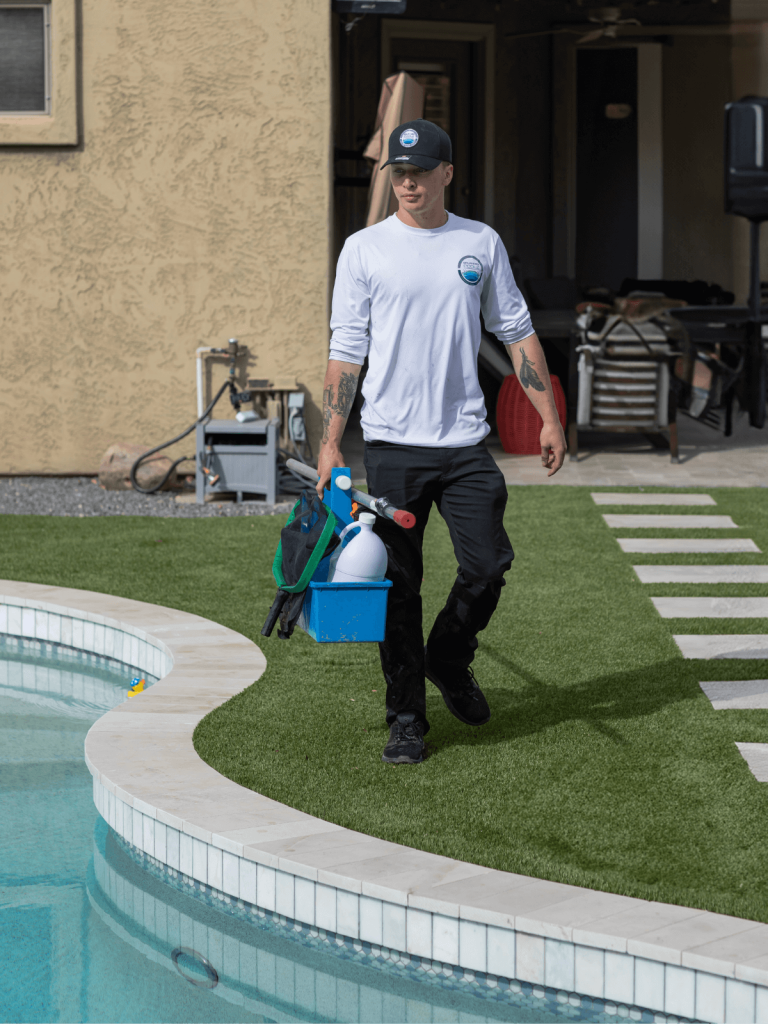
Pool filtration failure is one of the most common problems we see across Chandler and the East Valley. When your filter struggles, your water suffers fast. Therefore, spotting the early warning signs matters.
Your filter works hard every single day. In our hot Arizona climate, it runs longer and faces heavier debris loads. As a result, small issues can grow quickly.
In this guide, we explain the clearest signs of trouble. Additionally, we share simple tips to keep your system healthy. Let’s dive in.
Why Filtration Matters So Much in the East Valley
Your filter is the heart of your pool’s water quality. It removes dirt, oils, algae, and fine particles. Without it, no amount of chemicals can keep water clear.
Here in Chandler, Gilbert, and Mesa, our dust and monsoon storms add extra stress. Because of this, filters here often work harder than in milder regions. Therefore, regular checks become essential.
The Three Main Filter Types
Most homes in Tempe and Scottsdale use one of three filter systems. Each one fails in slightly different ways.
- Sand filters: Simple and durable, but they need media changes.
- Cartridge filters: Popular and easy to clean by hand.
- DE (diatomaceous earth) filters: Excellent filtration, but more complex.
Knowing your type helps you understand symptoms faster. Moreover, it guides the right repair approach.
Sign 1: Cloudy or Hazy Water That Won’t Clear
Cloudy water is often the first red flag. You balance your chemicals, yet the haze remains. However, the real cause may be your filter.
When a filter fails, it stops trapping fine particles. As a result, those particles float freely and cloud the water. Therefore, persistent haze deserves a closer look.
What to Check First
First, inspect your filter pressure gauge. Next, clean or backwash the system. Then, watch the water over the next day or two.
If clarity does not return, the filter media may be worn out. For example, old cartridges lose their pleated structure over time. Additionally, cracked DE grids let dirt slip past.
Sign 2: Abnormal Filter Pressure Readings
Your pressure gauge tells a powerful story. Every filter has a normal operating range. However, big swings signal trouble.
High pressure usually means a clog or dirty media. On the other hand, very low pressure can mean a flow problem. Both deserve attention.
High Pressure Warning Signs
A reading well above your clean baseline points to buildup. Because of this, water flow drops and filtration weakens. First, clean the filter element thoroughly.
If pressure stays high, you may need new media. Meanwhile, ignoring it can stress your pump and pipes. Therefore, act early to avoid bigger repairs.
Low Pressure Warning Signs
Low pressure often signals a blockage before the filter. For example, a clogged pump basket can starve the system. Additionally, a leaking suction line may pull in air.
Sign 3: Debris and Dirt Returning to the Pool
Have you noticed dirt blowing back through your return jets? That symptom is a clear failure signal. It often points to internal filter damage.
In sand filters, broken laterals let sand escape. Meanwhile, DE filters with torn grids push powder back. As a result, you see cloudiness or grit on the floor.
Spotting Sand in Your Pool
Finding sand on the pool floor is a telltale sign. Because of this, you likely have a cracked lateral or standpipe. Therefore, a professional inspection is wise.
Our team often sees this issue in older Gilbert and Mesa homes. However, it is usually a straightforward repair. Contact the Balanced Poolz team to discuss your pool and get it sorted.
Sign 4: Short Filter Cycles and Frequent Cleaning
Do you clean your filter far more often than before? That pattern signals declining performance. Additionally, it wastes your time and water.
A healthy filter holds dirt for a reasonable stretch. However, a failing one clogs quickly. As a result, you backwash or rinse constantly.
Why This Happens
Worn media loses its ability to spread debris evenly. Therefore, the surface clogs faster. For example, compacted sand channels water through narrow paths.
Old cartridges break down and trap less. Meanwhile, dirty DE grids cake up fast. In each case, replacement often restores normal cycles.
Sign 5: Leaks Around the Filter Tank
Water pooling near your equipment pad is never normal. Leaks waste water and signal failing parts. Moreover, they can damage your pump over time.
Common leak points include the tank clamp and O-rings. Additionally, cracked tank bodies leak under pressure. Because of this, inspect your equipment regularly.
Simple Leak Checks
First, dry the area around the filter. Next, run the system and watch for drips. Then, mark any spots where water appears.
Small O-ring leaks are easy fixes. However, a cracked tank usually needs replacement. Therefore, get an honest assessment before deciding.
Sign 6: Strange Noises or Vibrations
Your filter and pump should run fairly quietly. Loud rattles or banging sounds mean something is wrong. Additionally, vibrations can loosen fittings.
These noises often start at the pump but affect the whole system. As a result, filtration efficiency drops. Therefore, never ignore new or growing sounds.
Sign 7: Algae Returns Despite Good Chemistry
Algae thrives in our warm Arizona sun. However, strong filtration usually keeps it in check. When algae keeps returning, suspect your filter.
A weak filter cannot remove algae spores effectively. Because of this, blooms recur even after treatment. Meanwhile, your chemical costs climb.
Green-to-Clean Recovery
Sometimes a green pool needs both treatment and filter repair. Our green-to-clean service tackles both issues together. Therefore, results last longer.
For deeper guidance on water sanitation, the CDC’s healthy swimming resources offer trusted, science-based information. Additionally, they explain why filtration supports safe water.
How Arizona Heat Speeds Up Filter Wear
Our long swim season puts extra hours on every system. As a result, filters here age faster than in cooler climates. Therefore, proactive care pays off.
Monsoon dust and pollen also overload filters quickly. Furthermore, high temperatures stress plastic parts and O-rings. Because of this, East Valley pools need attentive maintenance.
Smart Maintenance Habits
- Check your pressure gauge weekly.
- Clean filter elements on a regular schedule.
- Inspect O-rings and clamps for wear.
- Backwash sand and DE filters when pressure rises.
- Replace media at recommended intervals.
These habits extend filter life. Moreover, they protect your pump and heater. As a result, you avoid costly surprises.
When to Call a Professional
Some issues are simple DIY fixes. However, others need trained hands. Knowing the difference saves money.
Call a pro for cracked tanks, broken laterals, or stubborn leaks. Additionally, recurring cloudiness often needs expert diagnosis. Therefore, do not guess with major repairs.
Our technicians serve homeowners across Chandler, Gilbert, Mesa, and Tempe. We provide detailed weekly reports with photos and on-the-way texts. Explore your options with Balanced Poolz and keep your water crystal clear.
Frequently Asked Questions
How long do pool filters usually last?
It varies by type and care. However, cartridges often last a few years, while sand media lasts longer. Therefore, regular checks help you plan ahead.
Can a bad filter raise my chemical costs?
Yes, it often does. Because the filter cannot remove particles, you use more chemicals. As a result, your monthly costs climb.
Is cloudy water always a filter problem?
Not always. Sometimes chemistry is the culprit. However, if balanced water stays cloudy, your filter is a likely cause.
Should I repair or replace my filter?
It depends on age and damage. Minor O-ring leaks are easy repairs. However, cracked tanks usually justify replacement.
How often should I clean my filter in Arizona?
Our dust and heat demand frequent attention. Therefore, many East Valley owners clean more often than the national average. Watch your pressure gauge for the best timing.
Keep Your Pool Healthy Year-Round
Pool filtration failure rarely happens overnight. Instead, it builds through small, ignorable signs. Therefore, catching them early protects your investment.
Watch for cloudy water, odd pressure, leaks, and returning debris. Additionally, listen for new noises and track recurring algae. Each clue points toward action.
Our team delivers affordable, reliable pool care with no long-term contract. Moreover, we back our work with a 30-day money-back guarantee. Request a free quote from Balanced Poolz today and enjoy a cleaner, healthier pool all season.