
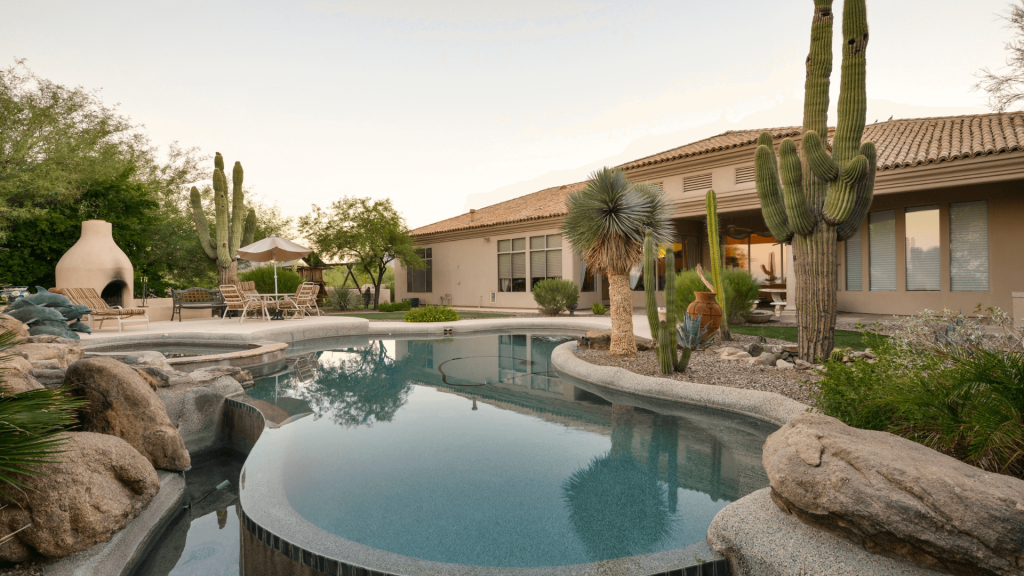
Has your backyard oasis turned into a murky swamp? A green pool can appear almost overnight, especially during a hot Chandler summer. One day the water sparkles, and the next it looks like pea soup.
The good news is that recovery is possible. Moreover, most green pools can return to crystal-clear condition with the right steps. This guide walks Chandler and East Valley homeowners through the process.
Because algae spreads fast in Arizona heat, quick action matters. Therefore, understanding the causes and cures helps you protect your pool and your budget.
What Causes a Green Pool?
A green pool means algae has taken over your water. Algae are tiny plant-like organisms that thrive in warm, sunny conditions. As a result, our Chandler climate creates a perfect breeding ground.
Several factors trigger a green pool. First, low chlorine levels let algae grow unchecked. Next, poor circulation gives algae quiet spots to bloom.
Common Triggers in the East Valley
- Vacation neglect: Skipping care for a week during summer heat.
- Chemical imbalance: High pH reduces chlorine’s power.
- Dust storms: Monsoon debris adds organic material.
- Broken equipment: A failing pump stops water from circulating.
Homes across Gilbert, Mesa, and Tempe face these same challenges. However, monsoon season often makes matters worse. Because of this, late summer is peak green-pool season here.
How to Tell How Bad the Algae Is
Not every green pool is equally serious. Therefore, identifying the shade of green helps you plan. The color tells you how far the algae has spread.
Light Green Water
Light green usually means a fresh bloom. In this case, you can often see the bottom of the pool. As a result, recovery tends to be quicker and simpler.
Dark Green or Cloudy Water
Dark green signals a heavy infestation. Meanwhile, you may not see the steps or floor at all. This level needs more chemicals and more patience.
Black or Swamp-Like Water
Black-green water means severe algae growth. Additionally, you might spot debris or even frogs. At this stage, professional help often makes the most sense.
Unsure which category fits your pool? Contact our team for a quick assessment and honest advice.
Step-by-Step Green Pool Recovery
Green-to-clean recovery follows a clear order. First, gather your supplies and test kit. Then work through each step carefully.
Step 1: Test and Balance the Water
Start by testing your water chemistry. Focus on pH, alkalinity, and chlorine levels. Because balanced water helps chlorine work, this step comes first.
Aim for a pH near 7.4 to 7.6. Additionally, adjust alkalinity into a stable range. This preparation sets up a successful shock treatment.
Step 2: Remove Large Debris
Next, skim out leaves and floating debris. Then brush the walls and floor thoroughly. Brushing loosens algae so chemicals can reach it.
Pay attention to steps, corners, and shady areas. Algae often hides there. Furthermore, brushing these spots speeds up the whole process.
Step 3: Shock the Pool
Shocking means adding a large dose of chlorine. As a result, the chemical kills algae fast. For a heavy green pool, you may need several doses.
Always add shock in the evening. Sunlight burns off chlorine quickly during the day. Therefore, nighttime treatment gives it time to work.
Step 4: Run the Filter Continuously
Keep your pump running around the clock. Meanwhile, the filter captures dead algae from the water. Continuous circulation makes a huge difference.
Also, clean or backwash the filter often. Dead algae clogs it fast during recovery. In addition, a clean filter clears water more efficiently.
Adding a Pool Clarifier or Flocculant
After shocking, the water often turns cloudy blue. This is actually a good sign. It means the algae is dying.
However, dead algae can leave the water hazy. Therefore, a clarifier helps clump tiny particles together. Then the filter can trap them more easily.
Clarifier vs. Flocculant
- Clarifier: Gathers particles so the filter removes them slowly.
- Flocculant: Drops particles to the floor for manual vacuuming.
Flocculant works faster but requires vacuuming to waste. On the other hand, clarifier is gentler and easier for beginners. Choose based on how quickly you need results.
How Long Does Recovery Take?
Recovery time depends on the severity. A light green pool may clear in a day or two. Meanwhile, a swamp-like pool can take a week or more.
Warm Chandler weather actually helps chlorine act quickly. However, it also lets algae rebound if you stop early. Therefore, stay consistent until the water is clear.
Patience pays off during this process. Additionally, testing daily keeps you on track. Once the water clears, maintain steady chlorine to prevent a relapse.
Preventing Future Green Pools
Prevention beats recovery every time. Because algae grows fast here, routine care is essential. A steady schedule keeps your pool safe and clear.
Weekly Habits That Help
- Test chemistry weekly: Catch imbalances before algae blooms.
- Brush and skim often: Remove debris that feeds algae.
- Maintain chlorine: Keep a steady sanitizer level.
- Run the pump daily: Good circulation stops stagnant spots.
During monsoon season, check your pool after every storm. Dust and debris settle quickly across the East Valley. Therefore, extra attention prevents surprise blooms.
When to Call a Professional
Some green pools resist home treatment. Furthermore, equipment problems often hide behind the algae. A pro can spot pump or filter issues fast.
Homeowners in Gilbert, Mesa, and Tempe often call us for stubborn cases. Because of this, we offer green-to-clean recovery service. Explore your options and let us handle the hard work.
Why East Valley Pools Turn Green So Fast
Arizona’s climate creates unique challenges. Intense sun burns off chlorine daily. As a result, sanitizer levels drop faster than in cooler regions.
Monsoon storms also drive algae growth. They add organic material and disrupt chemistry. Meanwhile, high temperatures speed up every reaction in the water.
Chandler pools especially need consistent care. Therefore, a reliable weekly routine matters most here. A little effort now prevents big problems later.
Frequently Asked Questions
Can I swim in a green pool?
No, you should not swim in a green pool. Algae can hide harmful bacteria. Additionally, low visibility creates a safety risk. Wait until the water clears fully.
Will shocking alone fix my green pool?
Shocking helps, but it rarely works alone. You also need brushing, filtration, and balanced chemistry. Therefore, follow every step for the best result.
How much does green pool recovery cost?
Costs vary with the severity and pool size. A light bloom is inexpensive to treat. However, a swamp-like pool needs more time and chemicals.
Should I drain a very green pool?
Draining is usually a last resort here. Arizona’s dry soil can shift an empty pool shell. Therefore, chemical treatment is often safer and smarter.
How can I stop my pool from turning green again?
Keep chlorine steady and test weekly. Also, brush regularly and run your pump daily. Consistent care is the best long-term prevention.
Get Your Pool Crystal Clear Again
A green pool feels overwhelming, but it is fixable. With the right steps, your water can sparkle once more. Moreover, steady care keeps it that way.
At Balanced Poolz, we help Chandler and East Valley homeowners recover green pools fast. Our team handles the testing, treatment, and cleanup for you. Additionally, we back our work with a 30-day money-back guarantee.
Ready to enjoy clear water again? Request a free quote today. Let us restore your pool and keep it healthy year-round.