
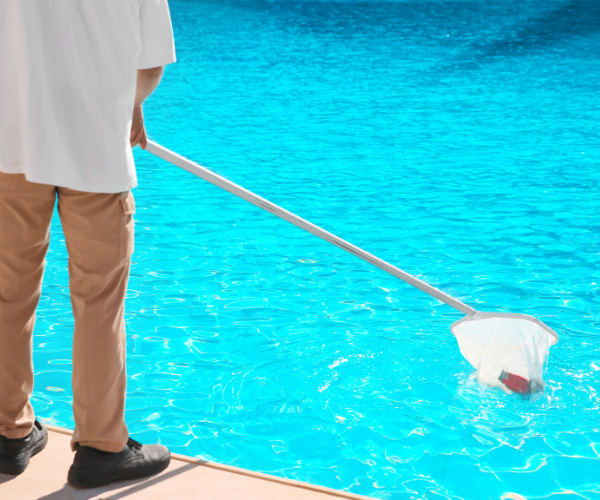
Do you see a chalky white line around your pool? That buildup is calcium. In Apache Junction and across the East Valley, calcium removal is one of the most common pool care needs we handle.
Arizona water is hard. Because of this, minerals build up fast on tile, plaster, and equipment. Left alone, they turn a beautiful pool into a rough, cloudy mess.
However, the good news is simple. You can manage and remove calcium with the right approach. Below, our team explains everything a local pool owner should know.
What Is Calcium Buildup in Your Pool?
Calcium buildup is a hard, crusty deposit. It forms when minerals in your water settle onto pool surfaces. Over time, it hardens and sticks.
In the East Valley, our tap water carries heavy mineral content. As a result, pools here scale faster than in many other regions. Therefore, calcium is a year-round battle for local owners.
Two Common Types of Calcium
First, there is calcium carbonate. It looks white and flaky. Usually, you can scrape it off with a little effort.
Next, there is calcium silicate. This type is gray and much harder. Moreover, it takes longer to form and is tougher to remove.
Knowing the type matters. For example, silicate deposits often need professional tools. Meanwhile, carbonate deposits sometimes respond to simple treatments.
Why Calcium Removal Matters for Apache Junction Pools
Calcium is more than an eyesore. In fact, it can damage your pool over time. Therefore, removing it early saves money.
Rough deposits scratch skin and snag pool toys. Additionally, scale narrows plumbing lines and clogs filters. As a result, your equipment works harder than it should.
Heaters suffer most of all. Because of this, scale reduces efficiency and shortens their lifespan. Finally, ignored buildup can crack tile grout and stain plaster.
The Desert Climate Factor
Apache Junction sees intense sun and high evaporation. When water evaporates, minerals stay behind. Consequently, calcium concentrates quickly in our climate.
Nearby cities like Mesa, Gilbert, and Chandler face the same issue. Therefore, local pool owners must stay proactive about scale.
Signs You Need Calcium Removal
Not sure if you have a problem? Watch for a few clear warning signs. Then act before the buildup spreads.
- White or gray crust along the waterline tile
- Rough patches on plaster or steps
- Cloudy water that will not clear up
- Reduced water flow from jets or returns
- Scale inside the pump, filter, or heater
Do you notice several of these? If so, it is time to take action. Meanwhile, testing your water helps confirm the cause.
How Calcium Removal Works
There are several ways to remove calcium. The right method depends on the deposit type and severity. First, a technician inspects the buildup closely.
Bead Blasting for Tile
Bead blasting uses fine media to break away scale. It cleans tile without harsh scrubbing. Additionally, it works well on stubborn silicate deposits.
This method protects your tile finish. However, it requires professional equipment and skill. Therefore, most owners hire a service for this job.
Pumice Stone and Manual Cleaning
For light buildup, a pumice stone can help. You rub it gently on the deposits. However, use caution on delicate surfaces.
Pumice works on plaster and unglazed tile. On the other hand, it can scratch glass or ceramic tile. Because of this, test a small area first.
Acid Washing for Plaster
When scale covers the plaster, acid washing helps. This process strips a thin layer of the surface. As a result, it removes stains and calcium at once.
Acid washing is powerful but risky. Therefore, it should always be done by trained pros. Our team performs this service carefully across the East Valley.
Preventing Calcium Buildup
Prevention beats removal every time. With good habits, you slow scale before it starts. First, focus on balanced water.
Keep Your Water Balanced
Calcium hardness should stay within a healthy range. Also, watch your pH and total alkalinity closely. When these drift high, scale forms fast.
Test your water weekly during summer. Meanwhile, adjust chemicals as needed. In addition, a consistent routine prevents surprises.
Brush and Skim Regularly
Regular brushing stops deposits from hardening. Furthermore, it keeps surfaces smooth and clean. Brush the tile line at least once a week.
Skimming removes debris that traps minerals. As a result, your water stays clearer longer. Simple habits make a real difference.
Manage Evaporation
High evaporation concentrates minerals fast. Therefore, top off your pool with fresh water often. Also, consider partial drains to reset mineral levels.
In Apache Junction summers, evaporation soars. Because of this, monitoring your water level matters even more.
DIY vs. Professional Calcium Removal
Some light cleaning is fine for owners. However, heavy buildup needs a professional touch. Knowing the difference protects your investment.
When to Try It Yourself
Small carbonate spots respond to a pumice stone. Additionally, keeping water balanced is a smart DIY task. These steps require little more than time.
Still, be gentle with your surfaces. For example, scrubbing too hard can damage plaster. When in doubt, pause and call a pro.
When to Call the Experts
Silicate deposits almost always need professional care. Moreover, bead blasting and acid washing demand real expertise. A mistake here can cost far more later.
Our technicians serve Apache Junction, Mesa, Gilbert, and Chandler. Therefore, help is always close by. Ready to fix your buildup? Contact our team to discuss your pool today.
Caring for Your Pool After Calcium Removal
Removal is only the first step. Next, you must protect the fresh surface. Good aftercare keeps scale from returning fast.
Rebalance your water right away. Also, brush surfaces gently in the following weeks. In addition, monitor calcium hardness carefully.
A weekly service plan makes this easy. As a result, small problems get caught early. Meanwhile, your pool stays clear and inviting all year.
Frequently Asked Questions
How often does calcium buildup return?
It depends on your water and habits. However, most East Valley pools show scale within a year. Regular maintenance slows this greatly.
Is acid washing safe for my pool?
Yes, when done by trained professionals. However, it removes a thin plaster layer each time. Therefore, it should not be overused.
Can I remove calcium myself?
You can handle light spots with a pumice stone. On the other hand, heavy deposits need professional tools. When unsure, ask an expert.
Why is calcium worse in Apache Junction?
Our hard water and high evaporation cause it. As a result, minerals concentrate quickly. Proactive care is the best defense.
How do I stop calcium from coming back?
Keep your water balanced and brush weekly. Also, top off evaporated water often. Finally, schedule routine professional service.
Keep Your Pool Crystal Clear Year-Round
Calcium does not have to ruin your pool. With smart prevention and expert help, you stay ahead of it. Moreover, a clean pool protects your equipment and your budget.
At Balanced Poolz, we serve Apache Junction, Chandler, Gilbert, Mesa, and Tempe. Additionally, we offer weekly cleaning, acid washing, and expert repairs. We back our work with a 30-day money-back guarantee and no long-term contract.
Ready to remove that stubborn buildup? Explore your options and request a free quote today. Let our team keep your pool healthy and beautiful all year.