Comparing Plaster Treatments in Arizona's Arid Climate
This technical comparison is drawn from field diagnostics performed across hundreds of East Valley swimming pools and specifications outlined by the National Plasterers Council (NPC) — not generic online pool tips.
| Factor | Light Chemical Wash | Full Acid Wash (1:1) | What We Observe in Arizona |
|---|---|---|---|
| Surface Etching & Cement Removed | Cleans surface film only (< 1/64"); uses buffered sulfamic acid. | Chemically etches 1/32" to 1/16" of cement paste to expose fresh white cement. | East Valley tap water leaves dense calcite crystal shells. A controlled 1:1 muriatic blend is necessary to dissolve mineral crusts without gouging marble aggregate. |
| Algae & Deep Mineral Eradication | Cleans light surface dust, organic leaves, and mild mustard algae. | Dissolves stubborn copper stains, fertilizer burns, and black algae roots. | Summer pool water temperatures exceeding 90°F drive black algae micro-filaments deep into plaster pores where standard chlorine levels cannot reach. |
| Lifespan & Frequency Limits | Safe every 1 to 2 seasons for cosmetic refreshing. | Maximum 2 to 3 times over a plaster shell's 10 to 15-year lifespan. | Over-acid washing eats away smooth cement paste, leaving a sandpaper-like finish that snags automatic pool sweeps and accelerates rapid scale re-accumulation. |
| Drainage & Thermal Requirements | Often performed submersed or with a shallow partial water drop. | Requires 100% pool drainage followed by continuous soda ash neutralization. | Must be executed when ambient temperatures remain below 85°F. Draining plaster under direct 105°F+ summer sun triggers catastrophic plaster hydration shock and cracking. |
How Hard Water and Desert Dust Transform Pool Plaster
In communities like Gilbert, Mesa, and Chandler, municipal tap water enters your pool with Total Dissolved Solids (TDS) already exceeding 700 to 800 ppm. Over a typical Arizona summer, high evaporation leaves pure water behind as vapor while minerals concentrate. Within 3 to 5 years, water hardness often spikes beyond 2,500 ppm TDS and calcium hardness tops 900 ppm.
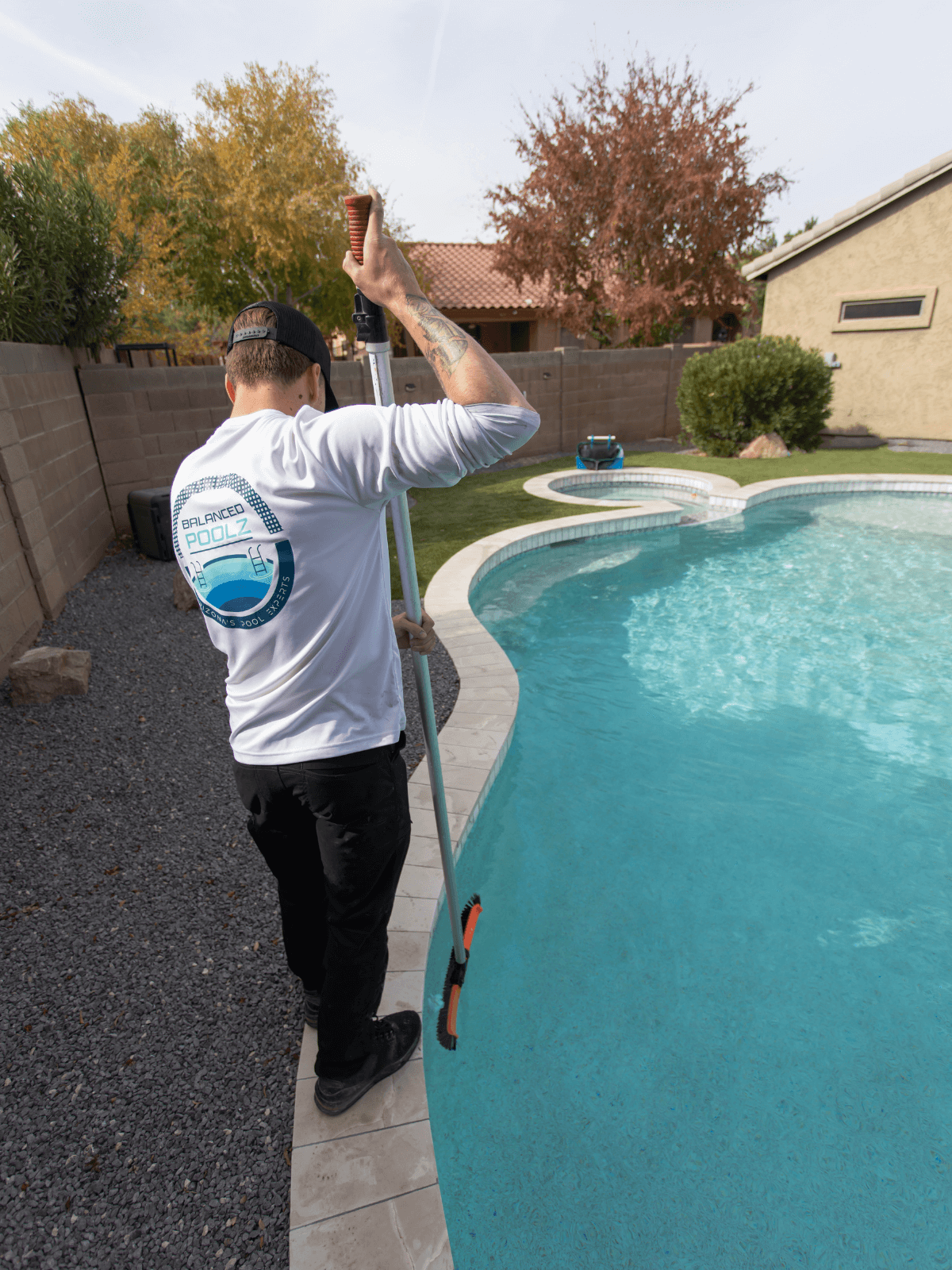
When the Langelier Saturation Index (LSI) shifts into scale-forming territory, calcium carbonate precipitates out of solution, bonding to underwater walls as a rough, gray-white sandpaper crust. Brushing with a standard nylon or stainless steel pool brush simply slides over this hardened mineral stone without making a dent.
The 3 Unmistakable Signs Your Pool Requires an Acid Wash
- Black Algae Colonization: If you see pinpoint black spots with protective waxy caps that survive repeat chlorine shock treatments, the roots have anchored into the plaster substrate. An acid wash dissolves the anchoring matrix.
- Widespread Calcium Carbonate Encrustation: When underwater plaster transitions from smooth marble to a rough surface that snags swimsuits and scratches swimmers' feet, the surface requires mineral etching.
- Severe Mineral Staining: Irrigation overspray containing dissolved iron, copper from older corroding heater cores, or heavy manganese deposits leave dark red, brown, or teal blotches that only targeted acid application can lift.