
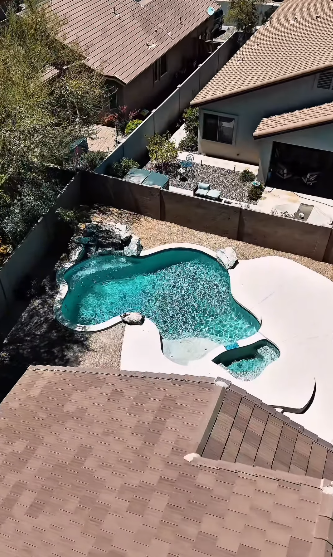
Are you tired of hauling heavy chlorine jugs every week? Many Arizona pool owners feel the same way. A saltwater conversion could be the upgrade your backyard needs.
Saltwater pools use salt to create chlorine naturally. As a result, the water feels softer and gentler on your skin. Additionally, you avoid the harsh smell of traditional chlorine.
At Balanced Poolz, we help homeowners across the East Valley explore this option. However, the process involves more than dumping salt into your pool. Let’s break it all down in simple terms.
What Is a Saltwater Conversion?
A saltwater conversion changes your traditional chlorine pool into a salt system. First, a device called a salt chlorine generator gets installed. This unit turns dissolved salt into chlorine.
Because of this, your pool sanitizes itself automatically. Meanwhile, you no longer need to add liquid or tablet chlorine each week. The salt cell does the hard work for you.
Many people think saltwater pools taste like the ocean. However, that is a myth. The salt level stays very low, so the water feels smooth and mild.
How the Salt Cell Works
The salt cell passes an electric current through salty water. As a result, it splits the salt into chlorine through a process called electrolysis. This chlorine then keeps your pool clean.
Next, the chlorine converts back into salt after use. Therefore, the cycle repeats over and over. This means you rarely need to add more salt.
Why Glendale and East Valley Pool Owners Love Saltwater
Arizona’s climate creates unique challenges for pool owners. Our intense sun burns through chlorine quickly. Therefore, traditional pools often need constant chemical adjustments.
Saltwater systems offer steadier chlorine levels. As a result, the water stays balanced with less effort. Homeowners in Glendale, Chandler, and Gilbert appreciate this consistency.
Moreover, saltwater feels gentler on swimmers. Families with kids often notice less eye irritation. On the other hand, chlorine pools can dry out skin faster.
Benefits Worth Considering
- Softer water that feels smooth on skin
- Fewer chemical purchases throughout the year
- Steadier sanitation during our hot summers
- Less chlorine odor around your patio
- Lower weekly maintenance for busy families
These perks make saltwater popular across Mesa and Tempe too. However, every pool is different. Because of this, professional guidance always helps.
The Saltwater Conversion Process Explained
Converting your pool follows a clear set of steps. First, a technician inspects your existing equipment. Then, they check whether your pump and filter can handle the change.
Next, the salt chlorine generator gets installed near your equipment pad. After that, the system connects to your plumbing and power. Finally, the correct amount of salt gets added to the water.
Meanwhile, water chemistry needs careful balancing. Therefore, a pro tests pH, alkalinity, and stabilizer levels. This step protects your equipment and swimmers.
Preparing Your Pool
Before conversion, your water should be clean and balanced. As a result, the new system starts on the right foot. Green or cloudy water needs treatment first.
Additionally, old or worn equipment may need replacement. For example, an aging pump might struggle with the added workload. A technician can advise you on this.
Choosing the Right Salt System
Salt systems come in different sizes. Therefore, you must match the system to your pool volume. A unit that is too small will wear out fast.
Furthermore, some systems include smart automation features. These let you control chlorine output from your phone. However, they may cost more upfront.
Common Myths About Saltwater Pools
Some homeowners hesitate because of misinformation. Let’s clear up a few common myths. This way, you can make a confident decision.
Myth one: Saltwater pools are chlorine free. In reality, they still use chlorine. However, the salt cell makes it for you.
Myth two: Saltwater needs no maintenance. On the other hand, these pools still require regular care. You must brush, skim, and test the water.
Myth three: Salt harms your pool surfaces. Actually, proper balancing protects your finish. Nevertheless, unbalanced water can damage any pool over time.
Maintenance Still Matters
Saltwater pools reduce your workload, but they do not eliminate it. Therefore, weekly attention keeps everything running smoothly. You still need to monitor salt and chlorine levels.
Also, the salt cell needs periodic cleaning. Over time, calcium can build up on the plates. As a result, cleaning restores its efficiency.
Caring for Your Saltwater Pool in Arizona
Our desert environment demands extra attention. Dust, monsoon storms, and hard water all affect your pool. Therefore, consistent maintenance protects your investment.
First, brush the walls and floor each week. This prevents algae from taking hold. Next, keep your skimmer basket clear of debris.
Additionally, test your water regularly. Hard water is common across the East Valley. Because of this, calcium and scale can affect the salt cell.
Protecting the Salt Cell
The salt cell is the heart of your system. Therefore, keeping it clean extends its life. Inspect it every few months for buildup.
Moreover, avoid running the generator without enough salt. Low salt levels strain the cell. As a result, it may fail prematurely.
Seasonal Adjustments
Arizona summers push pools hard. Therefore, you may need higher chlorine output during peak heat. Meanwhile, cooler months allow you to dial the system back.
This flexibility saves energy and salt. However, it takes experience to get right. A trusted pool tech can fine tune these settings for you.
Is Saltwater Conversion Right for You?
Every homeowner has different priorities. Some want lower maintenance. Others simply prefer softer water for their family.
Saltwater conversion often pays off over time. Because of this, many East Valley owners make the switch. However, the upfront cost varies by pool and equipment.
If you are unsure, talk to a professional first. We can assess your setup and explain your options. Explore your options with a team that knows Arizona pools.
Frequently Asked Questions
How much salt does my pool need?
The amount depends on your pool volume. Generally, saltwater pools keep salt at a low, comfortable level. A technician measures and adds the exact amount needed.
Will saltwater damage my pool equipment?
Not with proper care. However, balanced water is essential. Therefore, regular testing protects your surfaces and metal parts.
How long does a salt cell last?
Salt cells typically last several years with good maintenance. Meanwhile, cleaning and balanced water extend their life. Eventually, every cell needs replacement.
Can I convert an older pool?
Yes, in most cases. First, a technician inspects your equipment. Then, they confirm your pump and filter can handle the system.
Do saltwater pools save money?
Many owners save on chemicals over time. However, the salt cell requires occasional replacement. Overall, the convenience often outweighs the cost.
Ready to Make the Switch?
A saltwater conversion can transform your swimming experience. Softer water, less chlorine odor, and simpler care all await you. Because of this, more Glendale and East Valley homeowners choose saltwater every year.
At Balanced Poolz, we bring affordable and reliable service to Chandler, Gilbert, Mesa, and Tempe. Additionally, we back our work with a 30-day money-back guarantee and no long-term contract. Contact our team to discuss your conversion today.
Let us help you enjoy a cleaner, healthier pool year-round. Therefore, reach out for a free quote and personalized advice. Your crystal clear pool is closer than you think.