
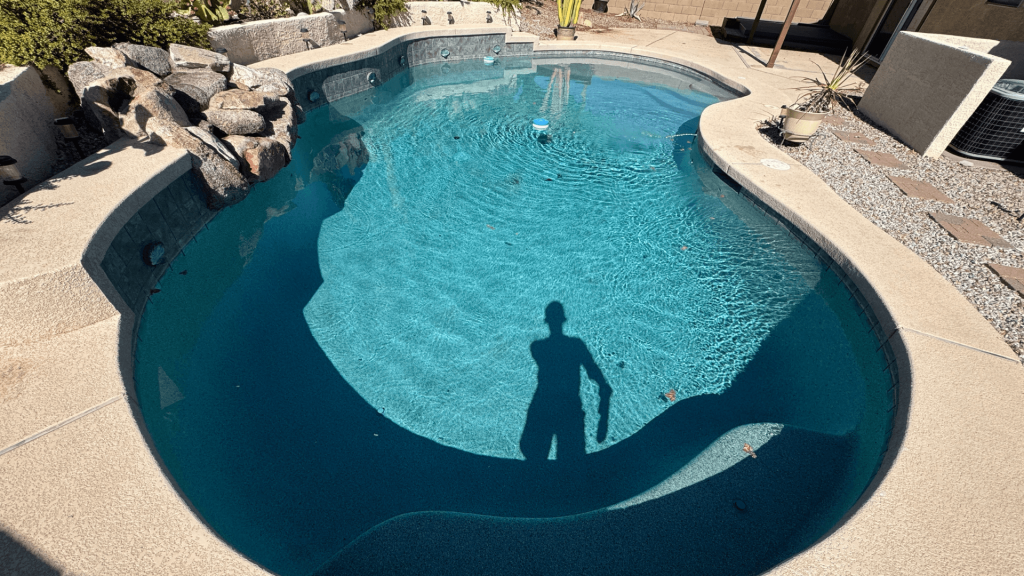
Thinking about a saltwater conversion for your Gilbert pool? You are not alone. Many East Valley homeowners want softer water and less chemical hassle.
At Balanced Poolz, we help pool owners across Gilbert, Chandler, Mesa, and Tempe make the switch. Therefore, we know what works in our hot Arizona climate.
In this guide, we explain how saltwater pools work. Additionally, we cover costs, benefits, and maintenance tips. Let’s dive in.
What Is a Saltwater Pool?
A saltwater pool still uses chlorine to stay clean. However, it makes that chlorine differently. Instead of adding chlorine tablets, the system creates it from salt.
A device called a salt cell does the work. It uses a process called electrolysis. As a result, the salt in your water turns into chlorine automatically.
Because of this, you handle far less chemical dosing. Meanwhile, your water feels smoother and gentler on your skin.
How the Salt System Works
First, you add pool-grade salt to the water. Next, the salt cell converts it into chlorine as water flows through. Then, that chlorine sanitizes the pool naturally.
The salt level stays low, so the water does not taste salty. In fact, it is far less salty than ocean water. Most swimmers barely notice it.
Why Gilbert Pool Owners Consider Saltwater Conversion
Gilbert summers are long and brutally hot. Therefore, pools get heavy use for many months each year. A saltwater conversion can make that ownership easier.
Additionally, many homeowners want fewer trips to the store for chlorine. Saltwater systems reduce that chore significantly. As a result, upkeep feels more hands-off.
Key Benefits of Saltwater Pools
- Gentler water: Softer feel with less eye and skin irritation.
- Steady chlorine: The system produces chlorine consistently.
- Less storage: No need to stockpile chlorine tablets.
- Lower ongoing chemical costs: You buy salt less often than chlorine.
Moreover, saltwater feels great after a workout or long day. Many Gilbert families love the smoother swimming experience. However, no system is completely maintenance-free.
A Few Things to Keep in Mind
Saltwater still needs balanced chemistry. Therefore, regular testing remains important. In addition, salt can be corrosive to certain surfaces and metals over time.
Because of this, proper equipment matters. Our team checks your pool before recommending a conversion. As a result, we help you avoid surprises down the road.
The Saltwater Conversion Process
A conversion is straightforward with the right technician. First, we inspect your existing equipment. Next, we confirm your pump and plumbing can support a salt system.
Then, we install the salt chlorine generator. This includes the salt cell and control board. Finally, we add the correct amount of salt and balance the water.
Step One: Equipment Inspection
Every conversion starts with a full inspection. We look at your pump, filter, and surface type. Therefore, we can flag any concerns early.
For example, older heaters may need protective upgrades. Meanwhile, some surfaces handle salt better than others. We explain your options clearly before any work begins.
Step Two: Installing the Salt System
Next, we install the salt chlorine generator inline with your plumbing. This unit runs quietly and automatically. Additionally, it lets you adjust chlorine output easily.
Most systems mount near your existing equipment pad. As a result, the setup stays clean and organized. We test everything before we finish.
Step Three: Adding Salt and Balancing
Finally, we add pool-grade salt and dissolve it fully. Then, we balance pH, alkalinity, and stabilizer levels. Because of this, your salt cell works efficiently from day one.
Proper balance protects your equipment too. Therefore, we never rush this final step. We want your pool ready to enjoy right away.
Saltwater Conversion Costs in the East Valley
Costs vary based on pool size and equipment. Additionally, your current setup affects the total. A simple conversion costs less than one needing upgrades.
The salt chlorine generator is the main expense. However, ongoing costs stay low afterward. Many Gilbert owners find the long-term savings worthwhile.
What Affects Your Price
- Pool size: Larger pools need bigger salt cells.
- Existing equipment: Compatible pumps reduce added costs.
- Surface and metals: Some may need protection or upgrades.
- Automation: Smart controls add convenience and cost.
We provide clear, upfront estimates with no surprises. Therefore, you always know what to expect. Request a free quote to see your options.
Maintaining a Saltwater Pool in Arizona
Saltwater pools still need regular care. However, that care looks a little different. Our desert climate adds a few unique challenges.
For example, hard water and high heat affect chemistry fast. Therefore, consistent testing keeps your water balanced. Additionally, monitoring your salt cell prevents buildup.
Weekly Care Tips
- Brush and skim: Keep debris and algae under control.
- Test water: Check pH, alkalinity, and salt levels.
- Inspect the cell: Watch for scale or calcium buildup.
- Run the pump: Longer cycles help in summer heat.
Gilbert and Mesa water tends to be hard. As a result, salt cells can scale up over time. Cleaning the cell periodically keeps it working well.
Seasonal Adjustments
Arizona summers demand more chlorine output. Therefore, you may raise your generator setting in July and August. Meanwhile, cooler months need much less.
We handle these adjustments during weekly service. Additionally, we send detailed reports with photos. Because of this, you always know your pool’s status.
Is Saltwater Conversion Right for Your Pool?
Saltwater suits many homes across Chandler, Gilbert, and Tempe. However, it is not perfect for every situation. Older equipment sometimes needs updates first.
Therefore, a professional inspection helps you decide. We look at your pool honestly. As a result, you get advice that fits your budget and goals.
Good Candidates for Conversion
Families who swim often benefit most. Additionally, homeowners tired of handling chlorine love the change. Moreover, those wanting softer water enjoy the upgrade.
On the other hand, very old plumbing may need work first. In that case, we explain the trade-offs clearly. Then, you can make a confident choice.
Frequently Asked Questions
Do saltwater pools still use chlorine?
Yes, they do. However, the salt cell makes chlorine automatically. Therefore, you do not add tablets manually.
Will my pool taste salty?
No, not noticeably. The salt level stays very low. In fact, it is far below ocean water levels.
How long does a conversion take?
Most conversions finish in a single day. However, timing depends on your equipment. We confirm the schedule during your inspection.
Does saltwater damage pool equipment?
Salt can affect certain metals over time. Therefore, proper equipment and balance matter. We install protective features when needed.
How often should I service a saltwater pool?
Weekly service works best in Arizona. Because of this, we recommend regular professional care. It keeps your water clear and your cell healthy.
Ready to Make the Switch?
A saltwater conversion can transform your swimming experience. Additionally, it simplifies your pool care routine. Balanced Poolz makes the process easy and stress-free.
We serve Gilbert, Chandler, Mesa, Tempe, and the greater East Valley. Moreover, we back our work with a 30-day money-back guarantee. Best of all, we require no long-term contract.
So, are you ready to enjoy softer, cleaner water? Contact the Balanced Poolz team to discuss your pool today. We will help you explore your best options.