
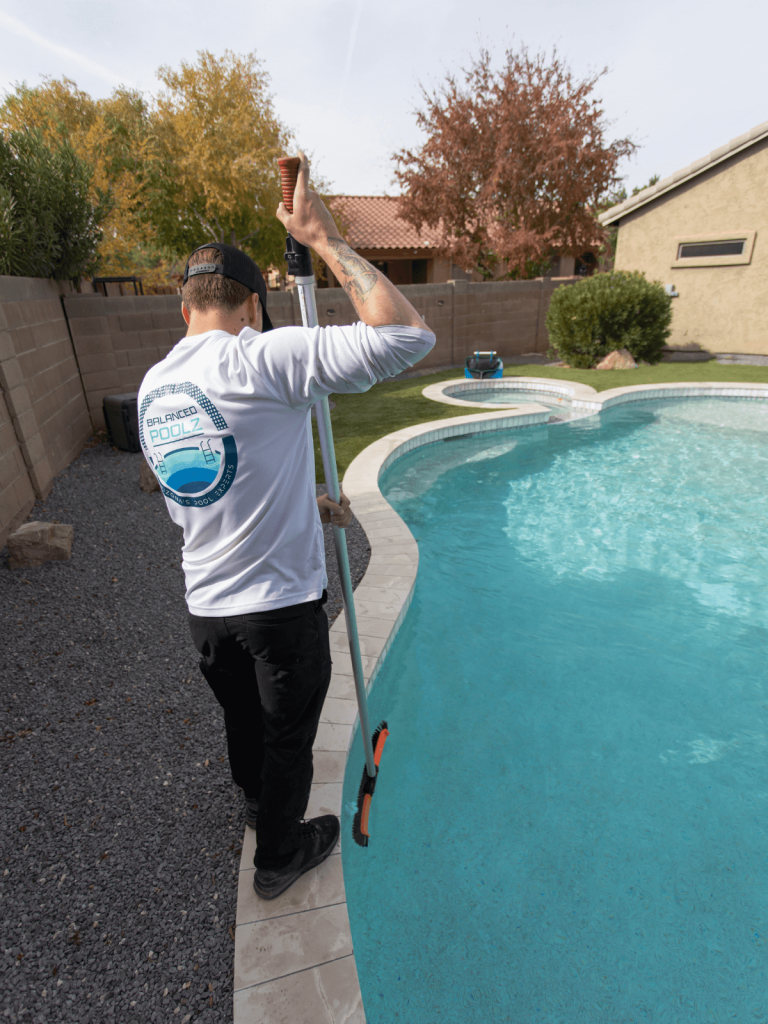
If you own a pool in Chandler, you have probably noticed white, crusty buildup along your waterline. That rough, chalky residue is calcium scale, and it loves our hard Arizona water. Fortunately, calcium scale removal is very possible with the right approach.
Calcium scale affects pools across Gilbert, Mesa, Tempe, and the greater East Valley. Because of our mineral-rich water and intense desert heat, scale forms faster here than in many other regions.
In this guide, we explain what causes scale, how to spot it early, and how to keep it under control. Let’s dive in.
What Is Calcium Scale?
Calcium scale is a hard mineral deposit that builds up on pool surfaces. It forms when calcium in your water bonds with other minerals and settles. As a result, you see crusty white or grayish patches.
This buildup commonly appears along the waterline. However, it can also coat tiles, steps, light fixtures, and even pool equipment over time.
Two Common Types of Scale
Pool owners usually deal with two main kinds of calcium scale. Knowing the difference helps you treat each one correctly.
- Calcium carbonate: White, flaky, and easier to remove. It often scrapes off with effort.
- Calcium silicate: Gray, dense, and stubborn. This type usually requires professional treatment.
For example, calcium carbonate may respond to a simple acid wash. On the other hand, calcium silicate often needs specialized tools and experience.
Why Arizona Pools Get Scale So Easily
Arizona is known for hard water, and that matters for your pool. Hard water contains high levels of dissolved calcium and magnesium. Therefore, scale forms more readily here than in softer-water regions.
Our desert climate makes things worse. Because of high temperatures and constant evaporation, mineral concentrations rise quickly. As the water level drops, the calcium stays behind and builds up.
Local Factors in the East Valley
Pools in Chandler, Gilbert, and Mesa face similar challenges. First, the municipal water supply tends to be mineral-heavy. Next, summer heat drives rapid evaporation across the valley.
Additionally, frequent refilling adds even more calcium over time. As a result, East Valley pools often need extra attention to stay scale-free. You can learn more about water hardness from the EPA’s drinking water standards resource.
How to Spot Calcium Scale Early
Early detection saves you time, money, and frustration. Therefore, it helps to know the warning signs. The sooner you catch scale, the easier it is to remove.
Watch for these common indicators around your pool:
- White or gray crust along the waterline tile
- Rough, sandpaper-like texture on surfaces
- Cloudy water that resists balancing
- Scaly buildup on steps, ladders, or light rings
- Mineral deposits inside pumps or heaters
Run your hand along the tile line during routine checks. If it feels gritty, scale is likely forming. Meanwhile, a quick visual scan can reveal early discoloration.
Why Early Action Matters
Scale grows thicker the longer you ignore it. Furthermore, heavy buildup can clog equipment and reduce efficiency. As a result, you may face higher energy bills and costly repairs.
For these reasons, regular monitoring is a smart habit. A trained technician can spot problems before they grow. Contact the Balanced Poolz team to discuss your pool’s surface condition.
Effective Calcium Scale Removal Methods
Removing scale depends on its type and severity. Therefore, no single method works for every situation. Below are the most common approaches we use and recommend.
Brushing and Scrubbing
Light calcium carbonate often responds to brushing. First, use a stiff pool brush on affected areas. Then, scrub gently to lift loose deposits without scratching surfaces.
However, brushing alone rarely removes heavy buildup. For tougher scale, you will need stronger methods.
Pumice Stones
A pumice stone can help on tile and concrete. Keep both the stone and the surface wet to avoid scratching. Then, rub the scale in slow, steady strokes.
This method works well for small areas. On the other hand, it is too slow for large surfaces. Also, avoid pumice on delicate finishes like fiberglass.
Acid Washing
Acid washing is a powerful option for serious buildup. Because it uses strong chemicals, this job is best left to professionals. Our team performs acid washing safely and effectively across the East Valley.
An acid wash strips away scale and surface stains. As a result, your plaster looks fresh and bright again. Moreover, it can restore the original color of your finish.
Professional Bead Blasting
For calcium silicate, bead blasting often works best. This method uses fine media to remove stubborn deposits. Furthermore, it cleans without harsh chemical exposure.
Bead blasting requires special equipment and training. Therefore, homeowners should always hire experienced technicians for this job.
How to Prevent Calcium Scale
Prevention is always easier than removal. Fortunately, a few consistent habits make a big difference. Below are practical steps every Chandler pool owner can follow.
Maintain Balanced Water Chemistry
Balanced water is your best defense against scale. First, monitor pH and keep it in the ideal range. Next, watch calcium hardness and total alkalinity closely.
When pH and alkalinity climb too high, scale forms faster. Therefore, regular testing keeps these levels in check. Weekly chemical testing prevents many surface problems before they start.
Brush Your Pool Regularly
Routine brushing disrupts early mineral buildup. As a result, deposits cannot harden into thick scale. Brush the waterline, steps, and corners each week.
Meanwhile, brushing also improves circulation near surfaces. This simple habit pays off over time.
Control Evaporation and Refilling
Evaporation concentrates minerals in your pool water. Because of this, scale develops faster during hot months. A pool cover reduces evaporation significantly.
Additionally, monitor your fill water quality. Frequent top-offs add calcium with every gallon. Therefore, smart refilling habits slow scale formation.
Schedule Professional Maintenance
Even careful owners benefit from expert care. Professionals catch issues that are easy to miss. Furthermore, they keep your chemistry consistent week after week.
Our weekly service includes brushing, testing, and equipment inspection. Request a free quote to keep your pool surfaces protected year-round.
Protecting Your Pool Equipment
Scale does not stop at your tile line. In fact, it builds up inside pumps, filters, and heaters too. As a result, equipment works harder and wears out faster.
Heaters are especially vulnerable to calcium buildup. Scale coats the internal components and reduces heat transfer. Therefore, energy costs rise while performance drops.
Watch for Warning Signs
Listen for unusual sounds from your equipment. Also, watch for reduced water flow or weak heating. These symptoms often point to hidden scale.
When you notice these signs, act quickly. Prompt repairs prevent bigger failures down the road. Our technicians service pumps, filters, heaters, and automation systems throughout Gilbert, Mesa, and Tempe.
Frequently Asked Questions
How often should I remove calcium scale?
It depends on your water and habits. However, most East Valley pools benefit from regular monitoring. With good maintenance, heavy removal may only be needed occasionally.
Can I remove calcium scale myself?
Light scale often responds to brushing or a pumice stone. However, heavy buildup and acid washing require professional help. Therefore, call an expert for stubborn or widespread scale.
Does balanced water really prevent scale?
Yes, balanced chemistry is the most effective defense. When pH, alkalinity, and calcium stay in range, scale slows dramatically. As a result, your surfaces stay smoother longer.
Will scale damage my pool permanently?
Untreated scale can etch and stain surfaces over time. Additionally, it harms equipment and raises costs. Therefore, early action protects your investment.
Is calcium scale common in Chandler pools?
Absolutely. Because of our hard water and heat, scale is very common here. Pools in Chandler, Gilbert, and Mesa all face this challenge regularly.
Keep Your Pool Clear and Scale-Free
Calcium scale is a common issue, but it is manageable. With consistent care and balanced water, you can keep surfaces smooth. Moreover, early action saves money and protects your equipment.
You do not have to handle scale alone. Our experienced team understands Arizona water and East Valley pools. We deliver reliable, affordable service with no long-term contract.
Ready to protect your pool? Contact Balanced Poolz today to discuss your options. Then, let our team help you enjoy crystal-clear water all year long.