
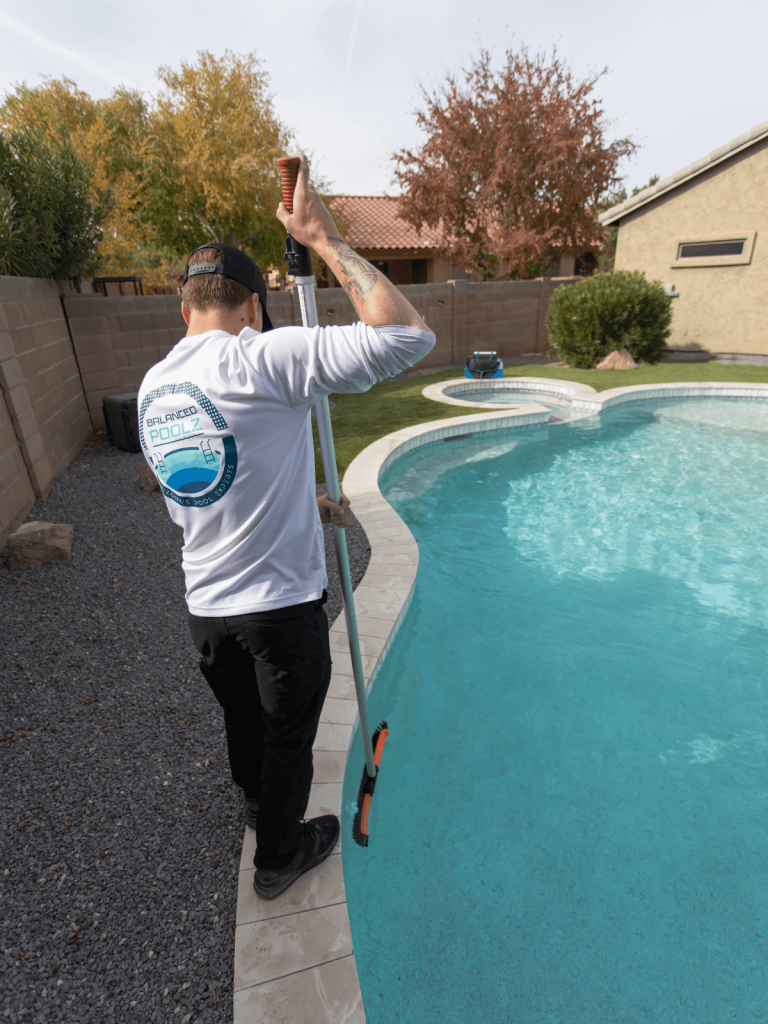
Clear, healthy water starts with accurate pool water testing. Many homeowners across Chandler test their pools, yet still struggle with cloudy or irritating water. Why does this happen?
The answer usually comes down to small testing mistakes. These errors lead to wrong chemical decisions. As a result, your pool never quite stays balanced.
At Balanced Poolz, we see these mistakes often across the East Valley. Therefore, we created this guide to help you test smarter. Let’s walk through the common errors and how to fix them.
Why Accurate Pool Water Testing Matters
Arizona’s intense sun puts heavy stress on pool water. Because of this, chemistry shifts faster here than in cooler climates. Accurate testing keeps your water safe and comfortable.
Balanced water also protects your equipment. For example, low pH can corrode pumps and heaters. Meanwhile, high pH leads to scale buildup on surfaces.
In short, good testing saves money and extends equipment life. Additionally, it keeps swimmers safe from bacteria and algae. So small habits make a big difference.
Mistake 1: Using Old or Expired Test Kits
Test reagents and strips do not last forever. Over time, they break down and give false readings. As a result, you treat your pool based on bad data.
Heat speeds up this breakdown even more. In Chandler garages, summer temperatures soar past comfortable limits. Therefore, your kit may expire faster than you expect.
How to Avoid It
- Check expiration dates before each season.
- Store kits in a cool, shaded spot.
- Replace strips and reagents once a year.
- Keep bottles tightly sealed after use.
Fresh supplies give reliable results. Consequently, your treatment decisions improve right away.
Mistake 2: Testing at the Wrong Time
Timing affects your test results more than people realize. For example, testing right after adding chemicals gives skewed numbers. The water has not mixed fully yet.
Also, testing in the heat of midday can mislead you. Direct sun burns off chlorine quickly during Mesa and Gilbert afternoons. Therefore, your reading may look lower than reality.
Better Testing Habits
Test in the early morning or evening instead. Then your chlorine reading reflects true conditions. Additionally, wait several hours after adding chemicals before retesting.
Consistency also matters here. Test at the same time each week. As a result, you can spot trends and act early.
Mistake 3: Collecting a Poor Water Sample
Where you collect water changes your results. Many owners scoop water from the surface near the skimmer. However, that spot does not represent the whole pool.
Surface water holds more debris and uneven chemicals. Furthermore, the skimmer area may trap concentrated chemicals. So your sample tells only part of the story.
The Right Way to Sample
- Collect from elbow depth, about 18 inches down.
- Choose a spot away from return jets.
- Use a clean container every time.
- Test the sample promptly after collecting.
A proper sample reflects your entire pool. Therefore, your adjustments will actually work.
Mistake 4: Ignoring Total Alkalinity
Many pool owners focus only on chlorine and pH. However, total alkalinity quietly controls both. Alkalinity acts as a buffer that stabilizes pH.
When alkalinity drifts, your pH bounces around. As a result, you chase numbers that never settle. This frustrates homeowners across Tempe and Chandler.
Keep Alkalinity in Check
Test alkalinity weekly along with pH. Then adjust alkalinity first before tackling pH. Because of this order, your water stabilizes faster.
Balanced alkalinity makes everything else easier. Moreover, it reduces wasted chemicals over time.
Mistake 5: Overlooking Cyanuric Acid Levels
Cyanuric acid, also called stabilizer, protects chlorine from sunlight. In sunny Arizona, this matters a great deal. Without it, chlorine vanishes within hours.
However, too much stabilizer causes problems too. High levels lock up your chlorine and weaken its power. Then your pool turns cloudy despite adding more chlorine.
Find the Right Balance
Test cyanuric acid at least once a month. The Centers for Disease Control offers helpful guidance on safe pool chemical handling worth reviewing. Therefore, you stay informed and safe.
If levels climb too high, partial draining helps. Then you refill with fresh water to dilute the stabilizer. Many East Valley pools need this reset by late summer.
Mistake 6: Trusting Cloudy or Rushed Readings
Rushing a test invites mistakes. For example, not waiting for color to develop skews strip readings. Additionally, dirty test vials distort reagent colors.
Bright sunlight can also trick your eyes. So matching colors becomes harder than it should be. As a result, you misjudge your chemical needs.
Slow Down for Accuracy
- Rinse vials thoroughly before each test.
- Read colors in natural shade, not direct sun.
- Follow the timing on your kit exactly.
- Repeat any reading that looks unusual.
Patience produces better data. Consequently, your pool stays clearer all season.
Mistake 7: Testing Too Rarely
Some owners test only when water looks bad. However, problems start long before they become visible. By then, algae may already be growing.
Weekly testing catches issues early. Therefore, small adjustments prevent big headaches later. This habit pays off across Gilbert, Mesa, and Chandler.
During monsoon season, test even more often. Storms wash debris and contaminants into your pool. As a result, chemistry can shift overnight.
How Local Conditions Affect Testing
The East Valley climate creates unique challenges. Intense heat, dust storms, and hard water all play a role. Because of this, generic advice often falls short here.
Hard water raises calcium hardness over time. Meanwhile, summer evaporation concentrates minerals further. So Chandler and Tempe pools often need careful monitoring.
Professional help removes the guesswork. Our team understands these local patterns well. You can learn more about our pool care services and how we keep your water balanced.
When to Call a Professional
Sometimes testing reveals stubborn problems. For example, water stays cloudy despite balanced numbers. In those cases, expert eyes help a lot.
Balanced Poolz includes chemical testing in every weekly visit. Additionally, we send detailed reports with photos. Therefore, you always know your pool’s true condition.
We also offer green-to-clean recovery and equipment repairs. So if testing reveals deeper issues, we handle them fast. Contact the Balanced Poolz team to discuss your pool today.
Frequently Asked Questions
How often should I test my pool water?
Test at least once a week during normal conditions. However, test more often in summer or after storms. Frequent testing prevents costly surprises.
Are test strips accurate enough?
Test strips work well for quick checks. However, liquid reagent kits offer more precision. Many owners use both for the best results.
Why does my pH keep changing?
Unstable pH often points to low alkalinity. Therefore, balance your alkalinity first. Then your pH usually settles into range.
Can I test water at any time of day?
Early morning or evening works best. Direct sun affects chlorine and color readings. As a result, midday tests can mislead you.
Should I drain my pool if cyanuric acid is high?
Partial draining helps dilute high stabilizer levels. Then refill with fresh water. Many East Valley pools need this by late summer.
Keep Your Pool Balanced Year-Round
Accurate testing forms the foundation of clear, healthy water. Avoid these common mistakes, and your pool stays inviting. Moreover, you save money on wasted chemicals.
Still, testing takes time and consistency. So many homeowners across Chandler, Gilbert, and Mesa trust the pros. We make pool care simple and stress-free.
Ready for crystal-clear water without the hassle? Request a free quote from Balanced Poolz today. Then enjoy your pool while we handle the chemistry.