
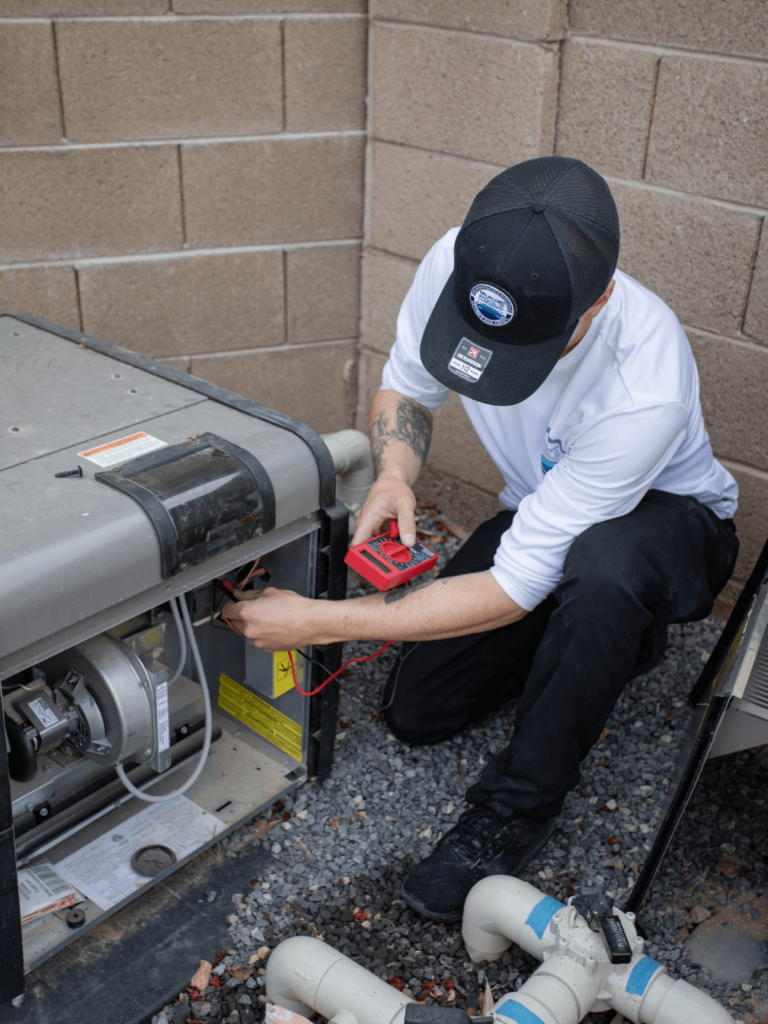
Every healthy pool starts with good water chemistry. At the center of it all sits proper pool pH balance. Get this number right, and your water stays clear, safe, and comfortable.
Many Chandler homeowners overlook pH until problems show up. However, balanced water protects your equipment, your skin, and your wallet. Therefore, understanding pH is one of the smartest things you can do as a pool owner.
In this guide, we explain what pH means and why it matters. We also share practical tips for the East Valley climate. Let’s dive in.
What Is pH and Why Does It Matter?
pH measures how acidic or basic your pool water is. The scale runs from 0 to 14. A reading of 7 is neutral.
Pool water should sit between 7.4 and 7.6. This range feels gentle on the body. Additionally, it helps chlorine work at its best.
When pH drifts, problems follow quickly. For example, low pH makes water acidic. As a result, it can corrode metal parts and irritate skin.
High pH vs. Low pH
High pH means the water is too basic. This leads to cloudy water and scale buildup. Moreover, it makes chlorine sluggish and less effective.
Low pH means the water is too acidic. This can damage pumps, heaters, and pool surfaces. On the other hand, both extremes cause discomfort and added costs.
- Ideal range: 7.4 to 7.6
- Too low: below 7.2 (acidic)
- Too high: above 7.8 (basic)
Why pH Matters So Much in the Arizona Heat
The East Valley sun changes pool chemistry fast. Hot temperatures speed up evaporation. Because of this, your water levels and balance shift more often.
Homeowners in Chandler, Gilbert, and Mesa face intense summer heat. Meanwhile, heavy swimmer use adds oils, sweat, and sunscreen. All of these factors push pH around.
Tempe pools with lots of sun exposure need extra attention. Therefore, checking pH often becomes even more important here than in cooler climates.
Local Water Conditions
Arizona tap water tends to be hard and alkaline. As a result, many East Valley pools drift toward high pH over time. This often leads to scaling on tiles and surfaces.
Hard water deposits look chalky and white. However, regular testing and small adjustments keep them under control. Consistency truly matters in our desert environment.
How pH Affects Chlorine and Sanitizing
Chlorine keeps your pool safe from bacteria and algae. Yet its power depends on pH. When pH climbs too high, chlorine loses much of its punch.
For example, at a pH of 8.0, chlorine works poorly. As a result, you waste money adding more sanitizer. Meanwhile, the water still feels unclean.
Balanced pH lets your chlorine do its job. Therefore, you use less product and get better results. This saves money and keeps swimmers protected.
The Algae Connection
Algae loves a pool with off-balance water. Green pools often start with neglected pH and weak chlorine. Additionally, our long swim season gives algae more chances to grow.
Once algae takes hold, recovery gets harder. However, prevention is simple. Keep pH steady, and your sanitizer stays strong.
How pH Impacts Your Pool and Equipment
Bad pH does more than cloud your water. It also wears down your investment. Pool equipment can be expensive to repair or replace.
Low pH eats away at metal components. For example, heater parts, pump seals, and metal fittings suffer over time. As a result, repairs come sooner than expected.
High pH causes the opposite issue. Minerals settle out and form scale. Furthermore, scale clogs pipes and stiffens filter performance.
Surfaces and Comfort
Plaster, tile, and liners all react to pH swings. Acidic water etches plaster surfaces. Meanwhile, basic water stains and roughens them.
Swimmers feel the effects too. Off-balance water causes red eyes and itchy skin. On the other hand, balanced water feels smooth and refreshing.
How to Test and Adjust pH at Home
Testing pH is easy and quick. You can use test strips, liquid kits, or digital meters. Each option gives you a fast reading.
Test your water at least twice a week. During summer, test more often. Because of this routine, you catch problems early.
- Test strips: dip, wait, and compare colors
- Liquid kits: add drops for an accurate reading
- Digital meters: fast and precise results
Raising and Lowering pH
Raise low pH with soda ash, also called sodium carbonate. Add it slowly and retest after circulation. Then adjust again if needed.
Lower high pH with muriatic acid or dry acid. Always follow label directions carefully. For more guidance on safe water chemistry, the CDC healthy swimming resources offer helpful background.
Always handle pool chemicals with care. First, wear gloves and eye protection. Next, add chemicals to water, never water to chemicals.
Keeping pH Balanced Year-Round
The East Valley swim season runs long. Therefore, pH care never really stops. A steady routine keeps your water dependable.
Total alkalinity also affects pH stability. Think of alkalinity as a buffer. It keeps your pH from bouncing around.
Keep total alkalinity between 80 and 120 ppm. As a result, your pH stays more predictable. This makes adjustments easier and less frequent.
Simple Habits That Help
Small habits make a big difference. First, rinse off before swimming to reduce oils. Next, keep debris out of the water.
Also, run your pump long enough each day. Good circulation spreads chemicals evenly. Furthermore, it prevents stagnant spots where problems start.
Many Gilbert and Mesa homeowners prefer professional help. A weekly service keeps numbers dialed in. You can explore your pool care options with Balanced Poolz to stay worry-free.
When to Call a Pool Professional
Some pH issues need expert hands. Persistent imbalance often signals a deeper problem. For example, faulty equipment can throw off your chemistry.
Cloudy or green water also calls for help. Our green-to-clean recovery brings pools back to life. Meanwhile, we identify the root cause.
A trusted technician saves you time and stress. Therefore, you avoid costly mistakes with chemicals. Contact the Balanced Poolz team to discuss your pool and get clear answers.
What Our Service Includes
We serve Chandler, Gilbert, Mesa, Tempe, and the greater East Valley. Our weekly visits cover brushing, skimming, and chemical testing. Additionally, we inspect your equipment every visit.
You receive detailed reports with photos. We also send on-the-way texts. As a result, you always know your pool is in good hands.
Frequently Asked Questions
How often should I check my pool’s pH?
Check pH at least twice a week. During hot summer months, test more often. Because of this, you catch swings before they cause damage.
What is the ideal pH for a pool?
Aim for a pH between 7.4 and 7.6. This range feels comfortable and protects equipment. Moreover, it keeps chlorine working effectively.
Why does my pH keep rising?
Arizona water is naturally alkaline and hard. Therefore, many East Valley pools trend toward high pH. Regular adjustments and balanced alkalinity help keep it steady.
Can high pH hurt my pool?
Yes, high pH causes scale and cloudy water. It also weakens chlorine. As a result, you may face algae and surface buildup.
Is it worth hiring a pool service?
Many homeowners find it well worth the time saved. A pro keeps your water balanced consistently. Additionally, you avoid expensive repairs down the road.
Keep Your Pool Healthy With Balanced Poolz
Proper pH protects your water, your equipment, and your comfort. The desert climate makes this care even more important. Therefore, a steady routine pays off all year.
Our team brings affordable, reliable, and knowledgeable service. We back our work with a 30-day money-back guarantee. Best of all, we require no long-term contract.
Ready for crystal clear water? Request a free quote today and let Balanced Poolz keep your Chandler or East Valley pool healthy season after season.