
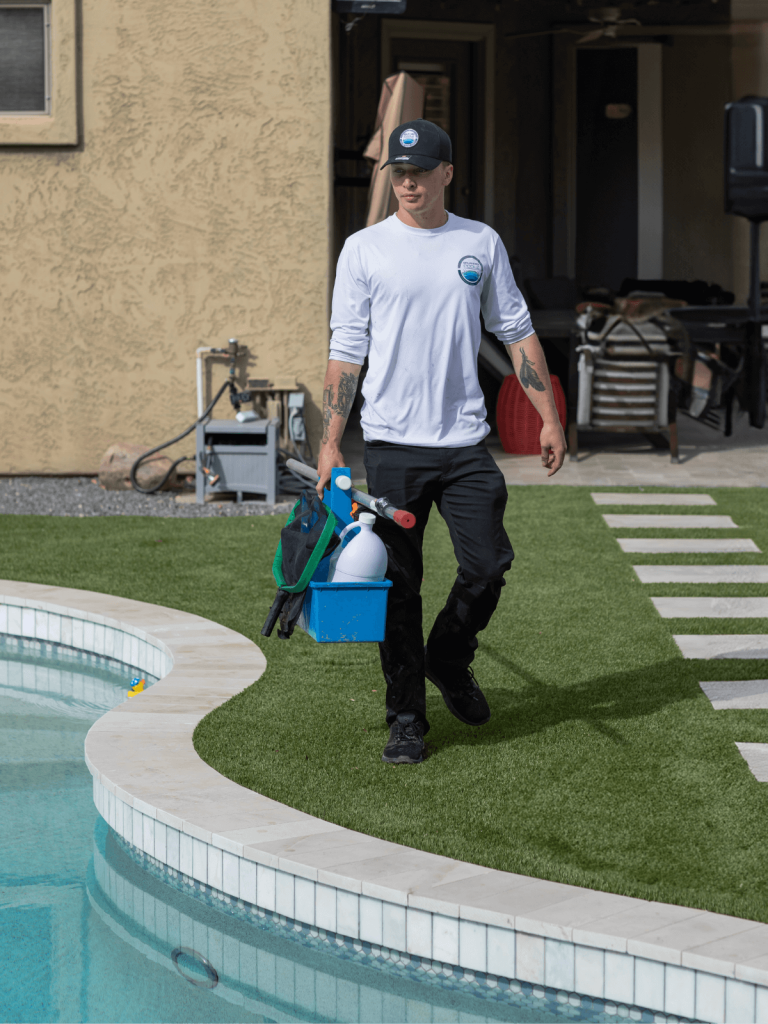
Clear, healthy water starts with good pool water chemistry. If you own a pool in Chandler or anywhere in the East Valley, you already know how quickly things change. The Arizona sun, heat, and dust all affect your water daily.
Many homeowners feel confused by all the numbers and chemicals. However, the basics are easier than they seem. Once you understand them, pool care becomes far less stressful.
In this guide, we break down the essentials in simple terms. Therefore, you can keep your water safe, clear, and swim-ready all year long.
Why Pool Water Chemistry Matters in Arizona
Balanced water protects your family and your equipment. When chemistry drifts, problems appear fast. For example, you may see cloudy water, algae, or stinging eyes.
In Chandler and Gilbert, our intense heat speeds up these issues. Water evaporates quickly, and chemicals burn off faster. As a result, levels shift more often than in cooler climates.
Proper chemistry also protects your pump, filter, and heater. Unbalanced water can corrode metal or leave scale buildup. Therefore, regular testing saves you money over time.
The Cost of Ignoring Your Water
Neglected pools turn green quickly during Mesa summers. Algae spreads fast in warm, untreated water. Moreover, cleanup often costs far more than routine care.
Because of this, consistent testing pays off. A little attention each week prevents big problems later.
The Key Pool Water Chemistry Levels to Know
Several measurements work together to keep water healthy. First, let’s review the most important ones. Each plays a unique role in your pool’s balance.
1. pH Level
pH measures how acidic or basic your water is. The ideal range sits between 7.4 and 7.6. When pH climbs too high, water turns cloudy and scale forms.
On the other hand, low pH can corrode equipment. It may also irritate skin and eyes. Therefore, checking pH is your first priority.
2. Chlorine (Sanitizer)
Chlorine kills bacteria and keeps water safe. Most pools need a free chlorine level between 1 and 3 parts per million. In Tempe’s summer heat, chlorine burns off faster.
As a result, you may need to add more often. Meanwhile, a stabilizer helps protect chlorine from the sun. We’ll cover that next.
3. Cyanuric Acid (Stabilizer)
Cyanuric acid shields chlorine from UV rays. Without it, the Arizona sun destroys chlorine quickly. The ideal range usually falls between 30 and 50 ppm.
However, too much stabilizer weakens chlorine’s power. Therefore, balance is key here too.
4. Total Alkalinity
Alkalinity acts as a buffer for pH. It keeps your pH from swinging wildly. Aim for a range of 80 to 120 ppm.
When alkalinity is stable, pH stays steady. As a result, your water becomes easier to manage.
5. Calcium Hardness
Calcium hardness measures dissolved calcium in the water. The ideal range sits around 200 to 400 ppm. Low calcium can damage plaster surfaces.
Meanwhile, high calcium causes scale and cloudy water. East Valley tap water often runs hard. Therefore, watch this level closely in Chandler and Gilbert.
How These Levels Work Together
No single measurement works alone. Instead, they all influence each other. For example, low alkalinity makes pH unstable.
Likewise, high cyanuric acid weakens your chlorine. Because of this, you must test the full set regularly. Balancing one number affects the others.
The U.S. Environmental Protection Agency offers helpful guidance on healthy swimming and safe pool maintenance. We recommend reviewing it for added peace of mind.
The Right Order to Adjust
Always adjust in a smart sequence. First, balance total alkalinity. Next, fine-tune your pH.
Then, add or adjust chlorine. Finally, check calcium and stabilizer. This order prevents constant back-and-forth corrections.
Testing Your Pool Water the Right Way
Regular testing keeps you ahead of problems. In our hot climate, weekly testing works best. However, busy seasons may call for more frequent checks.
You can use test strips, liquid kits, or digital meters. Test strips are quick and easy for beginners. Meanwhile, liquid kits offer greater accuracy.
Tips for Accurate Results
- Test away from return jets for a true reading.
- Collect water elbow-deep, not from the surface.
- Use fresh strips, since old ones give false numbers.
- Test in the morning before the sun affects chlorine.
Additionally, keep a simple log of your readings. Over time, you’ll spot patterns. As a result, you can react before problems grow.
Common Pool Water Problems in the East Valley
Our desert climate creates unique challenges. Below are issues we see often in Chandler, Mesa, and Scottsdale pools. Knowing the cause helps you fix them fast.
Cloudy Water
Cloudy water often signals imbalance. High pH or poor filtration are common causes. Therefore, test first and clean your filter next.
Green Algae
Green water means algae has taken over. This happens fast in summer heat. Because of this, low chlorine is usually to blame.
If your pool turns green, act quickly. Our green-to-clean recovery service can restore it. Meanwhile, steady chlorine helps prevent a repeat.
Eye and Skin Irritation
Stinging eyes often point to pH issues. Contrary to belief, “too much chlorine” is rarely the real cause. Instead, unbalanced pH is the usual culprit.
Scaling and Staining
White scale comes from high calcium or pH. Hard East Valley water makes this common. Therefore, regular monitoring keeps surfaces clean.
Seasonal Pool Chemistry in Arizona
Our seasons demand different care levels. Summer brings the biggest challenges. Heat, sun, and heavy use all strain your water.
Summer Care
During summer, test more often. Chlorine demand rises sharply in Tempe and Gilbert. Additionally, evaporation concentrates your chemicals.
As a result, you may add water and rebalance weekly. Shade and pool covers can also help.
Winter Care
Winter slows everything down. Cooler water uses less chlorine. However, you should still test regularly.
Many owners reduce service frequency in winter. Still, neglect can lead to spring algae. Therefore, consistent care remains important year-round.
When to Call a Professional
Some problems need expert hands. Persistent algae, cloudy water, or odd readings are signs. Moreover, equipment issues often affect chemistry too.
Our team handles testing, balancing, and repairs with care. We also provide detailed weekly reports with photos. As a result, you always know your pool’s status.
You can contact the Balanced Poolz team to discuss your pool anytime. We serve Chandler, Gilbert, Mesa, Tempe, and beyond. Furthermore, we offer fair pricing with no long-term contract.
Frequently Asked Questions
How often should I test my pool water?
Test at least once a week during summer. In winter, every one to two weeks works. However, test after storms or heavy use too.
What is the most important level to check?
pH and chlorine top the list. Together, they keep water safe and clear. Therefore, always check these first.
Why does my chlorine disappear so fast?
Arizona sun burns off chlorine quickly. Low stabilizer makes this worse. As a result, balanced cyanuric acid helps a lot.
Can I fix green algae myself?
Mild cases sometimes respond to shock and brushing. However, heavy algae often needs professional help. Our green-to-clean service restores tough cases fast.
Is hard water a problem in the East Valley?
Yes, our tap water runs hard. High calcium causes scale and cloudy water. Therefore, watch calcium hardness closely.
Keep Your Pool Crystal Clear Year-Round
Understanding water chemistry makes pool ownership easier. With a few simple habits, you can prevent most problems. Test often, adjust in order, and stay consistent.
Still, you don’t have to manage it alone. Our knowledgeable team keeps East Valley pools healthy and clear. Moreover, we back every job with a 30-day money-back guarantee.
Ready for stress-free pool care? Request a free quote today and explore your options. Let Balanced Poolz keep your Chandler-area pool sparkling all year.